What the standoff–breakdown–clamp triplet means for the circuit
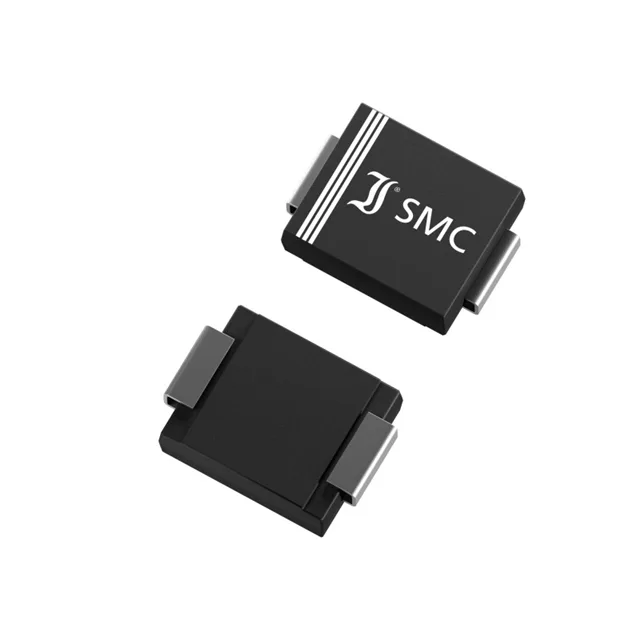
The 1.5SMCJ11CA is a unidirectional Zener-based TVS in the DO-214AB (SMC) package, specified with a reverse standoff of 11 V — the working rail the diode sits across without conducting in normal operation. That 18.2 V clamp ceiling is the number the downstream circuits see during the event, so the protected rail must tolerate a worst-case 18.2 V — the 11 V nominal never reaches the load in normal operation. The 1.5 kW peak pulse rating is a single-event capability for the 10/1000 µs surge shape — a longer-tailed or higher-energy surge profile derates differently, and the datasheet clamping curve determines whether the device survives a given threat level. For a continuous or repetitive transients, the thermal junction limit of +150 °C is the governing constraint, not the peak pulse number.
Why a Zener-type TVS in SMC works for general-purpose protection
Zener TVS devices clamp through avalanche breakdown — the clamping voltage rises with current, so the 18.2 V spec is the ceiling at 82.4 A. For a general-purpose board-level protection need, the 11 V standoff makes this a fit for 12 V nominal rails, with adequate headroom for the 10% tolerance band on standard 12 V supplies. The DO-214AB package is the standard SMC foot print, compatible with standard reflow profiles and widely available in tape-and-reel. The single bidirectional channel means this part protects one polarity — a positive-going transient relative to ground. For circuits that need dual-polarity clamping, two of these in inverse series would be required; a single unit does not protect against negative-going spikes.
Active production — sourcing and cross-reference check
As an active part with a standard SMC footprint and widely cloned 1.5SMCJ series footprint, second-source candidates exist from multiple manufacturers in the independent distribution market — the standoff voltage, clamping voltage, and peak pulse rating should be confirmed against each candidate's datasheet before swapping, as minimum breakdown and clamping characteristics can vary slightly across brands.