What the clamping ratings mean for a 12V automotive line
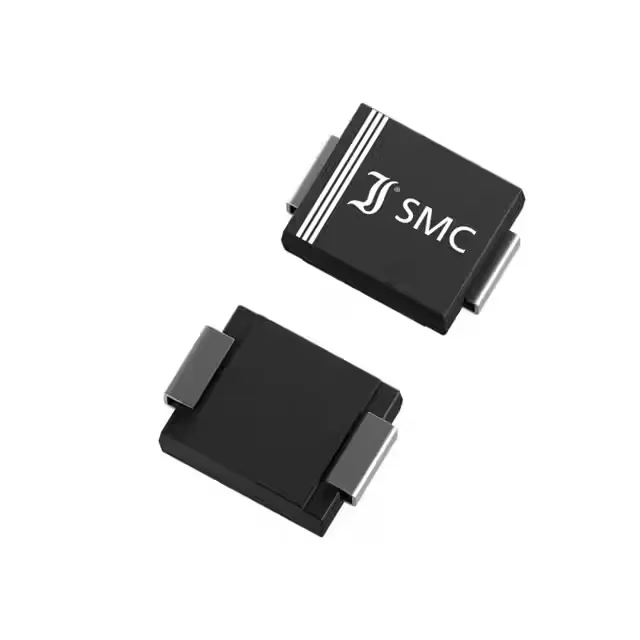
A unidirectional TVS Zener in DO-214AB (SMC), the 1.5SMCJ11A-AQ clamps a 12V automotive rail against transients by dissipating the surge energy between its standoff and clamping levels — 11 V reverse standoff (the normal working voltage) rising to 18.2 V maximum clamping at the peak pulse current. The minimum breakdown of 12.2 V gives ~1.2 V of headroom above the 11 V standoff — wide enough to stay fully off during normal 12V battery operation, but still below the transient surge ceiling that downstream ECU inputs must survive.
1.5 kW at 10/1000 µs is the standard IEC 61000-4-5 surge-withstand class for automotive protection — this is the rating the ECU subsystem designer checks against the load-dump pulse in ISO 7637-2. A 1 kW part would be undersized for 24V intermediate bus rails; the 1.5 kW rating gives margin on 12V lines without overspecifying the clamping voltage upward.
Automotive temperature grade and the -50 to 150 °C junction window
An ECU in the engine bay that sees 105°C on a summer day still has thermal headroom before the junction limit is reached. The package is DO-214AB SMC on a metal pad that conducts heat to the PCB — thermal pad design and solder joint integrity affect the real junction temperature as much as the datasheet rating.
Sourcing posture and lifecycle
Quoted to order against BOM quantity; availability and lead time confirmed at RFQ.