What the peak pulse rating means for your protection design
The 1.5SMCJ100: The 1.5 kW rating is a peak transient rating, not a continuous dissipation figure: the diode absorbs the energy of a short surge event and returns to quiescent state between events. The die thermal limit is governed by the 150°C maximum junction temperature (TJ max), so the board-level thermal path through the cathode tab to the PCB copper determines how quickly the junction cools between transients.
Standoff, breakdown, and clamping — the three-voltage protection window
The reverse standoff voltage of 100 V (typ) is the bias the line sits at during normal operation — the TVS presents a high impedance and does nothing until the transient exceeds this level. For a 100 V rail, this gives a protection window of roughly 11 V of breakdown headroom on the low end and 79 V of clamping margin on the high end, which is a typical profile for secondary-side protection on telecom or industrial 48–72 V rails that need to survive a tested surge level. The -50°C to 150°C operating temperature range is a junction-temperature window; the full temperature range of the equipment is narrower once the thermal resistance from junction to ambient is accounted for. At low ambient, the 8.4 A peak pulse rating holds without derating; at elevated ambient, the effective Tj max constrains the allowable surge repetition rate or peak amplitude.
Active status and sourcing posture
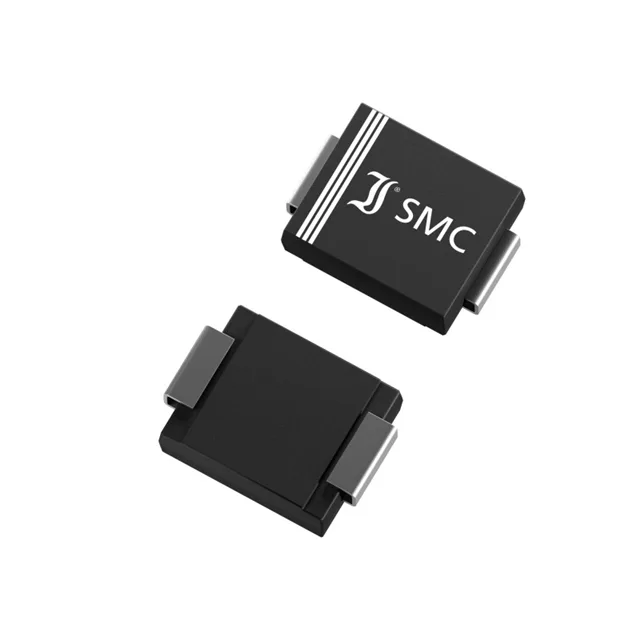
As a unidirectional 1.5 kW TVS in the standard SMC/DO-214AB package, the 1.5SMCJ series is a widely replicated footprint across multiple TVS suppliers, so parametric second-source candidates exist — confirm standoff, clamping, and peak pulse current match before substituting into a safety-critical protection path.