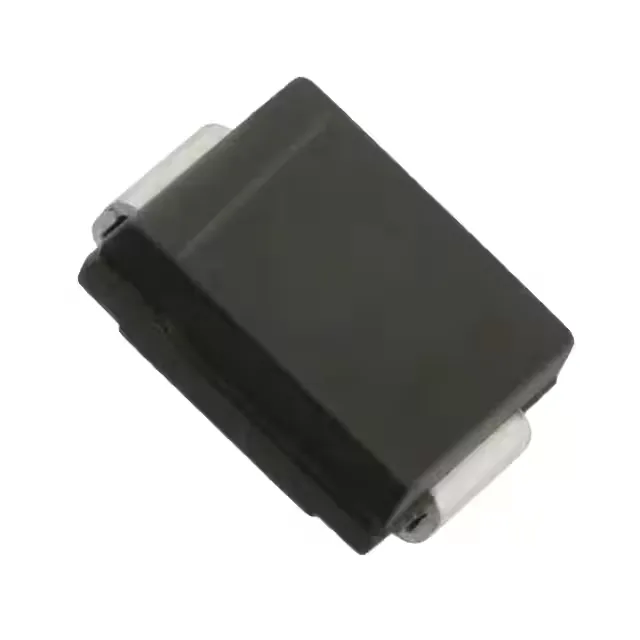
Automotive-grade transient suppression in a standard footprint
The SMCJ64AQ-13-F is a Zener-type TVS diode from Diodes Incorporated, part of the SMCJ series qualified to AEC-Q101. With a 64 V reverse standoff voltage and a 71.1 V minimum breakdown, it protects 48 V and 60 V nominal rails from transients up to 103 V clamping. The single unidirectional channel handles 14.6 A peak pulse current at the rated waveform.
What the ratings mean for the board
The 1500 W peak pulse rating is the device's ability to absorb a transient energy pulse without failing — it is not a continuous power dissipation figure. For a 10/1000 µs surge, the diode clamps the line at 103 V maximum, shunting 14.6 A away from the downstream circuitry. The 64 V standoff voltage means the diode draws negligible leakage current below that rail voltage; it only starts conducting when the transient exceeds the breakdown threshold. The -55°C to +150°C operating junction range covers the full automotive temperature envelope, including under-hood and engine-bay locations where ambient heat soaks above 105°C. AEC-Q101 qualification adds the reliability screening (high-temperature reverse bias, temperature cycling, ESD) that production automotive programs require for PPAP submission.
The DO-214AB (SMC) package is a standard JEDEC outline with a 0.420-inch body length and gull-wing leads. The copper pad area under the cathode tab sets the thermal resistance — a 1 oz copper pour of at least 500 mm² on the top layer keeps the junction temperature rise within limits during repetitive surge events. The SMCJ64AQ-13-F ships in Tape & Reel, compatible with standard pick-and-place and reflow profiles.