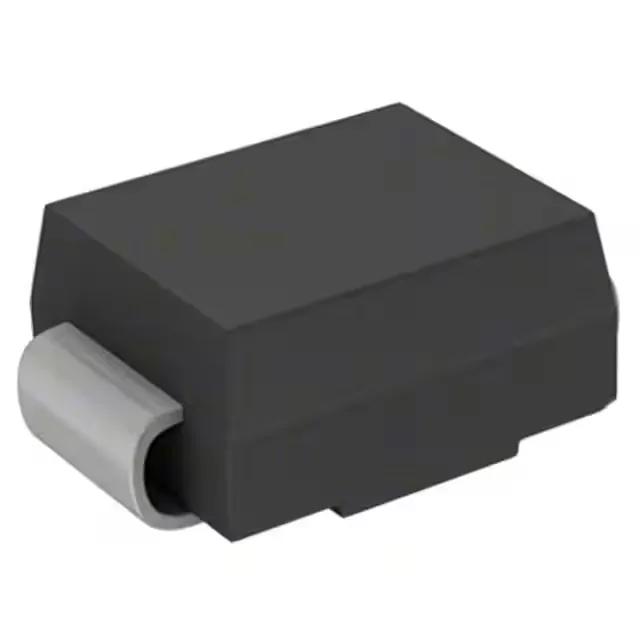
600 W peak pulse, 54 V standoff — what the ratings mean for your protection design
The SMBJ54A-13: This is a unidirectional Zener-type transient suppressor — one channel, biased for DC lines where the signal stays above ground. The 600 W rating means the device can absorb a single 10/1000 µs surge up to that power level without failing; for repetitive transients, derate per the pulse derating curve in the datasheet.
Breakdown and clamping — the protection window
The minimum breakdown voltage is 60 V, so the diode starts conducting and clamping above that threshold. The reverse standoff voltage of 54 V is the maximum continuous DC voltage the part can hold off without leakage exceeding the datasheet limit — a 48 V rail or a 54 V nominal bus is the typical application. The clamping voltage of 87.1 V at 6.9 A tells you the peak voltage the downstream circuitry must survive during a surge event.
Package and board-fit — DO-214AA SMB
Housed in the DO-214AA SMB package, the SMBJ54A-13 is a surface-mount device with a compact footprint suited for general-purpose PCB layouts. The supplier device package is SMB — the same as the case code. No power line protection feature is included; this is a standard TVS diode for signal or DC power rail transient suppression, not a crowbar or integrated filter.
Active production — sourcing posture
The base product number is SMBJ54, so variant ordering follows the -13 suffix for tape-and-reel packaging.