TVS protection window and what it guards
The SMBJ48CA-13: Its reverse standoff voltage of 48 V means the part does not conduct at the operating voltage — it only activates when the line exceeds that threshold. That 24 V window between standoff and clamp defines the protection margin for the downstream circuitry.
600 W peak pulse — what the rating means on a real board
The 7.7 A peak pulse current is the current the device shunts at the clamping voltage — it tells you the surge the junction can absorb before failure. The bidirectional configuration means a single device protects both positive and negative transients relative to ground, which halves the component count on bipolar signal lines like RS-485 or CAN bus.
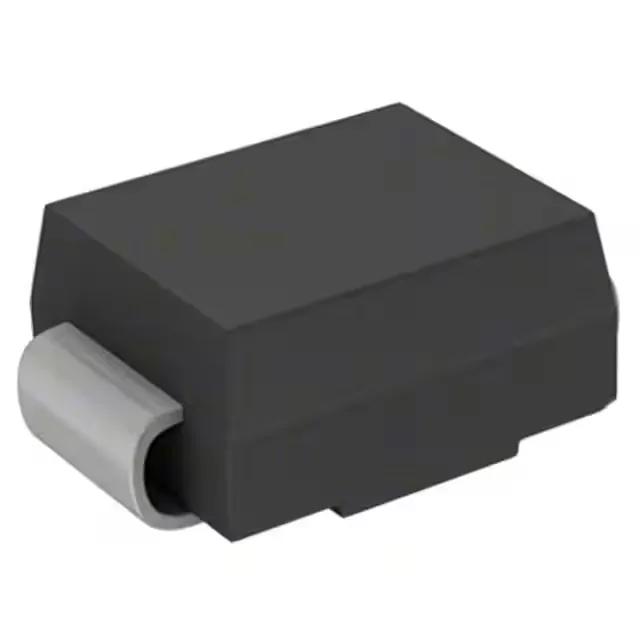
Housed in the DO-214AA SMB package with the supplier device package designation SMB, this surface-mount TVS uses the standard JEDEC footprint for that outline. The operating temperature range spans -55°C to 150°C, which covers both commercial and industrial environments without derating concerns. The part is specified for general-purpose applications and explicitly carries no power line protection rating, so it is intended for signal and data-line transient suppression rather than mains or DC bus clamping.