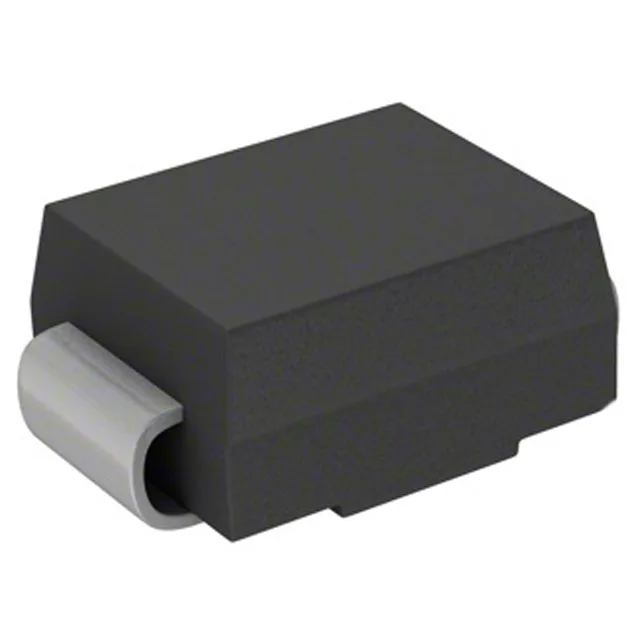
36V automotive TVS with AEC-Q101 pedigree
The SMBJ36AQ-13-F: It clamps at 58.1V maximum at 10.3A peak pulse current, meaning a 36V nominal rail sees the clamp engage before the downstream IC's absolute maximum rating is reached. AEC-Q101 qualification certifies this part for automotive-grade stress and reliability — the same device used in under-hood ECUs, body controllers, and infotainment modules. Capable is not qualified; this part carries the grade.
What AEC-Q101 means for your BOM
AEC-Q101 is the automotive discrete semiconductor qualification standard — it covers temperature cycling, ESD sensitivity, high-temperature reverse bias, and 100% pre-cap visual inspection. The SMBJ36AQ-13-F meets this standard across its full -55°C to 150°C junction temperature range, so it can be placed in engine-bay or chassis-mounted designs without a separate PPAP waiver.
Clamping voltage and surge protection fit
The 58.1V maximum clamping voltage at 10.3A (10/1000µs waveform) is the ceiling the protected rail sees during a surge. For a 36V nominal supply, this clamp stays well below the typical 60V-65V abs-max rating of automotive-grade DC-DC converters and transceivers. The 600W peak pulse rating means the part can absorb a 10/1000µs surge of that energy without failing short — the die area is sized for the automotive transient environment per ISO 7637-2 pulse 2a and 3a. DO-214AA (SMB) package is a standard surface-mount footprint shared across the SMBJ36A series. The same pad layout works for the industrial-grade SMBJ36A-13-F if the automotive qualification is not required — but the AEC-Q101 grade is the differentiator for automotive PPAP submissions.