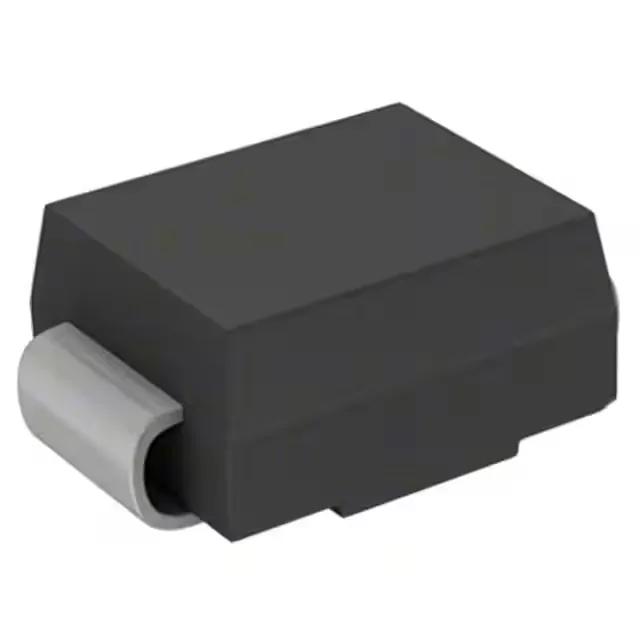
What the 130V standoff and 209V clamp mean on the bench
The SMBJ130A-13: It protects a single 130V DC rail by clamping transients to 209V maximum at a peak pulse current of 2.9A (10/1000µs waveform). The 130V reverse standoff voltage means the diode does not conduct below that rail level — it sits transparently on the line until a surge pushes the voltage above the breakdown threshold (144V minimum). The 209V clamp is the ceiling the downstream circuitry sees; if that exceeds your IC's absolute maximum rating, you need a lower-voltage TVS or additional protection.
600W peak pulse — how much surge it can take
That is the energy it absorbs without failing short — a common benchmark for secondary protection on DC rails in telecom, industrial control, and general-purpose boards. The part is marked as 'Power Line Protection: No' — this is not a mains AC surge suppressor; it is intended for DC signal or low-voltage power rails where the transient energy stays within the 600W envelope.