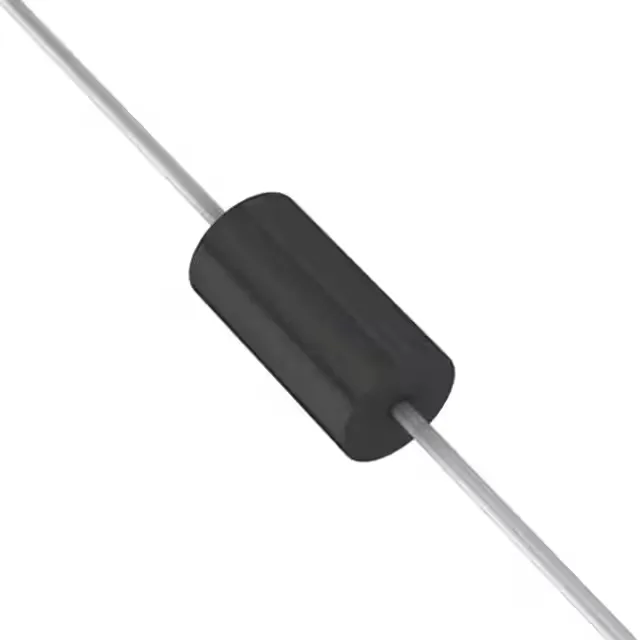
600W Zener TVS — what the ratings mean for a 15.3V rail
The P6KE18A-T: The 17.1 V minimum breakdown ensures the device does not conduct during normal operation, while the 25.2 V maximum clamping at 24 A peak pulse current (10/1000 µs waveform) defines the voltage the protected circuit must survive. For a 12 V or 15 V supply rail, this clamping window provides margin above the rail without triggering on normal ripple. The unidirectional configuration (one channel) means the TVS conducts only in reverse breakdown — it clamps positive transients above the standoff voltage. For circuits that also see negative spikes relative to ground, a bidirectional device or back-to-back pair is required. The part carries no power line protection rating — it is intended for signal or DC rail transient suppression, not AC mains surge clamping. Confirm the application does not require a mains-rated MOV or GDT.
DO-15 axial — board-fit considerations
Housed in the DO-204AC (DO-15) axial-lead through-hole package, the P6KE18A-T is a standard form factor for hand-solder or wave-solder assembly. The axial leads require bending for vertical or horizontal board mounting — allow stress relief bends near the body to avoid cracking the glass passivation during thermal cycling. The DO-15 footprint is shared across the P6KE series, so a single PCB layout serves the full voltage range. The junction temperature range spans -55°C to 175°C, covering military and industrial thermal environments — engine compartments, outdoor telecom cabinets, and avionics bays. However, this temperature rating alone does not imply radiation hardness or MIL-PRF screening; it is a standard commercial Zener TVS specified for general-purpose use.
Diodes Incorporated lists the P6KE18A-T as obsolete. The P6KE series is a mature TVS family with broad voltage coverage. The procurement path for this exact part is surplus sourcing; confirm lead time and pricing per RFQ.