Protection threshold and signal-line fit
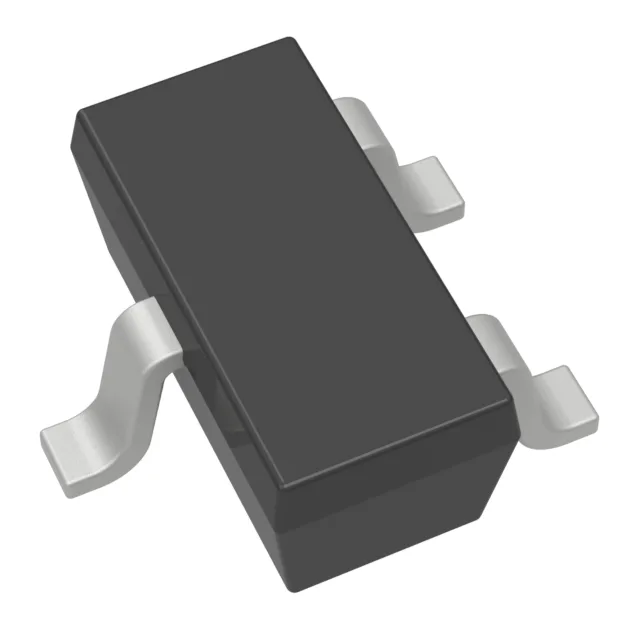
The D5V0L2B3T-7: Two bidirectional channels in a single SOT-523 package let you protect a differential pair or two independent lines with one component, saving board space on dense layouts.
Pulse handling and signal integrity trade-off
That 84 W figure is the energy budget for a single transient — enough for ESD events and short-duration surges on low-power signal lines, but not sized for mains-coupled or long-duration overvoltage. Capacitance is 15 pF at 1 MHz, which matters when this TVS sits on a high-speed data bus. For a 100 MHz clock line, 15 pF adds roughly 1.5 pF of load per channel after accounting for PCB parasitics — still workable for most I2C, SPI, or UART lines, but check the bus timing budget if the line already runs near its capacitive limit. The device does not include power line protection — it is built for signal-line ESD and transient clamping, not for continuous overvoltage on a power rail.
Where it goes and how to source it
Operating temperature spans -65°C to 150°C, so it survives the thermal extremes of automotive under-hood or industrial enclosure environments without derating.