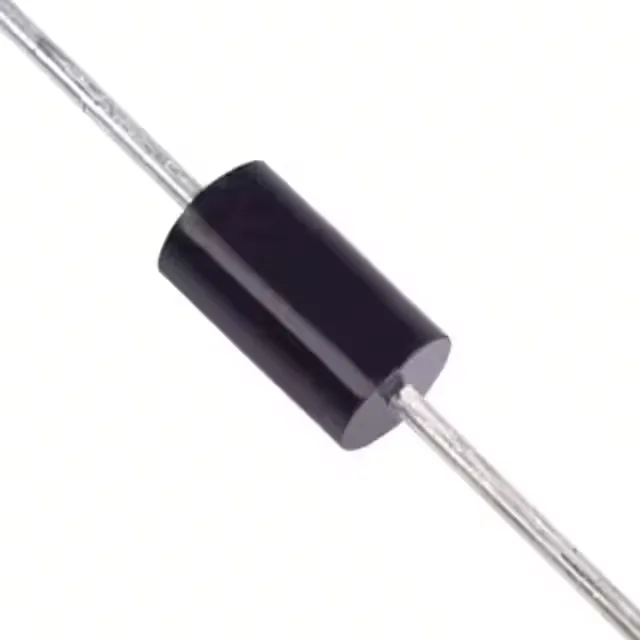
What the 1500W rating means for your protection design
The 1.5KE120CA-B: That 1500W figure is the maximum dissipation the die can absorb in a single surge — at the clamping voltage of 165V, the part handles a peak pulse current of 9.1A. For a field-swap scenario, the DO-201 axial package is through-hole, so you can pull the old one and solder the new one in with a standard iron — no hot-air station needed.
Voltage thresholds and where they fit
Reverse standoff voltage is 102V — the TVS draws negligible leakage below this level, so it stays off the bus during normal operation. Breakdown starts at 114V minimum, and clamping is guaranteed at 165V maximum across the 9.1A pulse. That 63V window between standoff and clamp means a 120V nominal rail gets clipped before it hits 165V, protecting downstream silicon rated for, say, 200V.
Obsolete — sourcing reality for the 1.5KE120CA-B
Diodes Incorporated lists this part as Obsolete. The DO-201 package is common across the 1.5KE family, so a parametric substitute (e.g., a different standoff voltage) may fit the same board footprint if the protection threshold can shift.
Package and field-replacement note
The DO-201AA / DO-27 axial leaded package is through-hole, with a body diameter around 5.3 mm and a lead diameter of 1.3 mm. Polarity is marked by a cathode band — but since this is a bidirectional device, orientation in the board doesn't matter; it clamps equally in both directions. The bulk packaging means each piece is loose, so keep them in an ESD bag until install.
The wide range also means the part survives storage in a hot warehouse or a cold truck.