What the 1500 W rating means for your rail
The 1.5KE10A-B: That power rating tells you how much transient energy the part can absorb in a single surge event — for a 24 VDC control rail or a 12 V automotive bus, a 1500 W TVS clamps a lightning-induced or load-dump transient before it reaches the downstream regulator or IC. The reverse standoff voltage is 8.55 V, meaning the diode stays off below that level and only starts conducting when the transient pushes above it. That 14.5 V clamp is the voltage the protected circuit actually sees — a 12 V nominal rail with a 16 V abs-max input can survive this without damage.
Package and mounting for the axial footprint
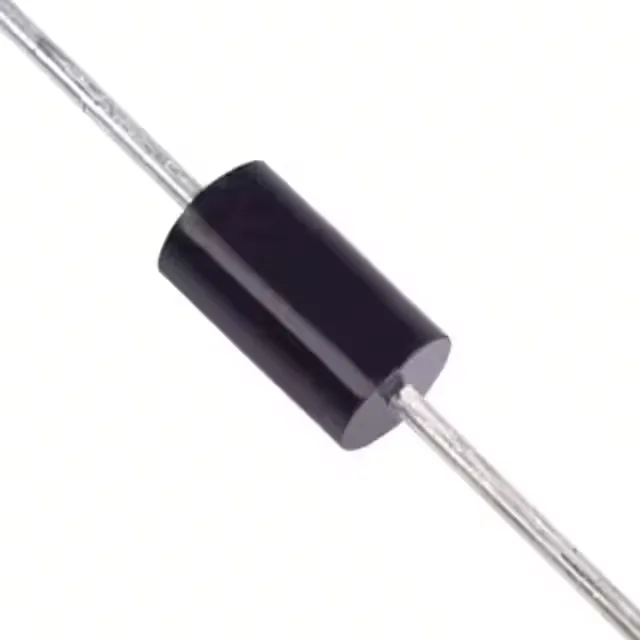
Housed in a DO-201AA / DO-27 axial-lead package (supplier device package DO-201), the 1.5KE10A-B is a through-hole part intended for point-to-point wiring or PCB mounting with lead bending. The axial body sits inline with the leads, so it can be laid flat against the board or stood off for better airflow — common in power supply input stages and telecom line cards where the TVS is the first component after the connector. The wide temperature margin means the clamping voltage and leakage current stay within datasheet limits even when the TVS is mounted near a hot heatsink or inside a sealed enclosure.
Lifecycle reality — obsolete, sourced to order
Diodes Incorporated lists the 1.5KE10A-B as obsolete. The part carries no power line protection rating (it is not designed for AC mains surge suppression), so it is best suited for DC rail protection in control panels, automotive modules, and general-purpose board-level transient clamping. The DO-201 package is still widely used, making mechanical fit straightforward for rework or new assembly.