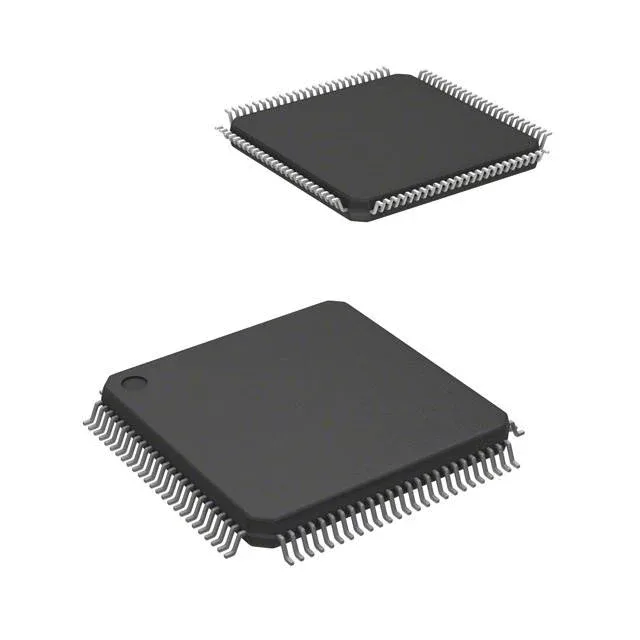
In a shared-memory design, that 20 ns window must fit within the bus cycle of both ports. If one port runs at a faster clock, the 20 ns part may force a wait state — the 10 ns siblings (CY7C1011DV33-10BVXI, CY7C1021DV33-10BVXIT, CY7C1021DV33-10VXI) are faster but also higher density or different organization, so the trade-off is speed versus memory width and footprint.
Asynchronous dual-port — no clock, but arbitration matters
Asynchronous operation means no clock is needed for the memory core — address transitions trigger the access cycle. That simplifies timing but puts the burden on the design to handle simultaneous port contention. The CY7C038V-20AIKJ includes on-chip arbitration logic (busy flag) to flag collisions; the system must sample that flag and retry the access. For designs that prefer a clocked interface, a synchronous dual-port SRAM would be a different architecture.