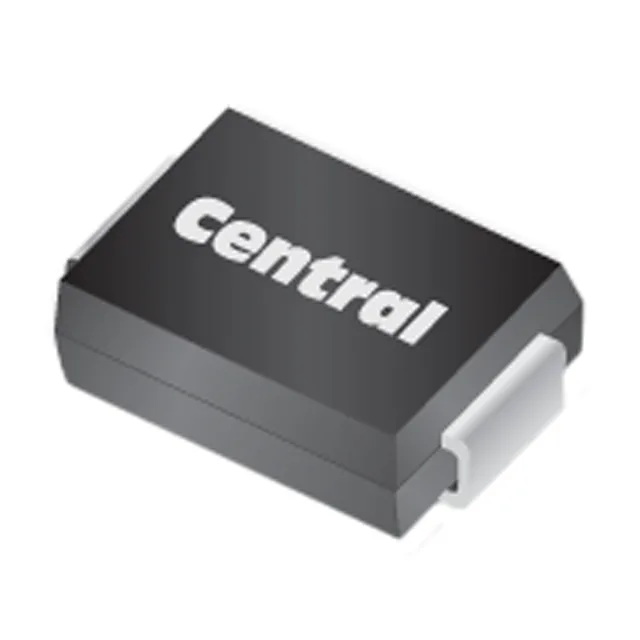
Bidirectional TVS clamping hierarchy
The 1.5SMC9.1CA TR13 PBFREE: The standoff voltage of 7.78 V typical marks the rail the circuit runs at without the TVS conducting — the line sits below breakdown during normal operation. A transient that exceeds the 8.65 V minimum breakdown threshold triggers the clamp, limiting the event to a maximum 13.4 V across the device. The CA suffix denotes a bidirectional Zener TVS — it clamps both polarities symmetrically, unlike the unidirectional 'CA' counterpart which only handles one direction.
Surge-withstand and power rating
The 1.5 kW peak pulse rating defines the surge energy the device can absorb as a single event at the specified 10/1000 µs waveform — this is the standard telecom/industrial surge test shape. At that waveform the peak pulse current reaches 112 A; the resulting clamping voltage of 13.4 V is what the downstream circuitry must survive during the event — so the protected device's abs-max must be specified above 13.4 V, not above the 7.78 V standoff.
Surface-mount termination suits reflow assembly; Tape & Reel packaging is the standard reel format for automated pick-and-place.