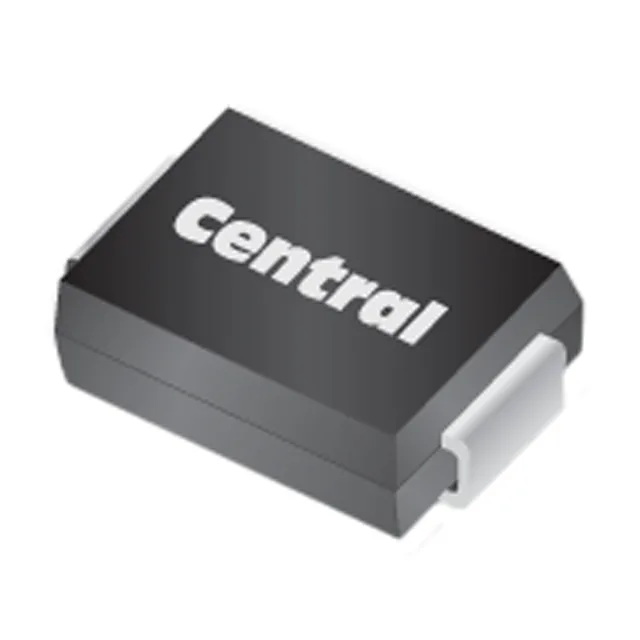
Central Semiconductor Corp 1.5SMC7.5CA TR13 PBFREE — Circuit Protection

1.5SMC7.5CA TR13 PBFREE Central Semiconductor 1.5SMC7.5CA

MPN1.5SMC7.5CA TR13 PBFREE
Active

Central Semiconductor Corp, 1.5SMC7.5CA TR13 PBFREE, bidirectional TVS Zener, 1500W peak pulse, 6.4V standoff, 11.3V clamping, 132A peak pulse current, DO-214AB SMC, -65 to 150°C, surface mount.

$0.3126Ref. price · indicative, final on quote
Independent supplier — new & surplus stockAuthenticity-screened · ESD-safe packingListing updated Aug 2026

Specifications

1.5SMC7.5CA TR13 PBFREE specifications
ParameterValue
TypeZener
MountingSurface Mount
Voltage - breakdown7.13V
Voltage - clamping (Max) @ ipp11.3V
Voltage - reverse standoff6.4V
Current - peak pulse (10/1000μs)132A
Power - peak pulse1500W (1.5kW)
Power line protectionNo
Operating temperature-65°C ~ 150°C (TJ)
PackageTape & Reel (TR)
ApplicationsGeneral Purpose
CaseDO-214AB, SMC
Bidirectional channels1

Product details

1500W peak pulse — what that ceiling means for the circuit

The 1.5SMC7.5CA TR13 PBFREE: At 1500W peak pulse (10/1000 µs waveform), this 1.5SMC7.5CA sits in the mid-range of TVS Zener suppressors — it handles a transients without requiring the thermal headroom of a multi-kilowatt part, which keeps the DO-214AB package viable for board-level suppression ondc rails.

The clamping triad: standoff, breakdown, and clamping voltage

The reverse standoff of 6.4V sets the normal operating level — the TVS stays invisible to the circuit until a surge pushes the rail above that threshold. Once exceeded, the breakdown knee starts at 7.13V minimum and the clamping ceiling sits at 11.3V maximum at the rated 132A peak pulse current — the 4V differential between clamping ceiling and standoff is the let-through voltage the downstream load sees during suppression.

Frequently asked questions

What does a bidirectional TVS Zener like the 1.5SMC7.5CA protect against?

Bidirectional means it clamps both polarities — the anode and cathode sit at equal potential in normal operation, and either side going positive or negative relative to the other triggers suppression. That makes it suitable for AC rails or any node where the polarity can reverse under fault