What the voltage ratings mean for protection design
The 1.5SMC6.8CA BK PBFREE: The minimum breakdown voltage of 6.45 V marks where the Zener channel begins conducting in the reverse direction — above this threshold the device is in avalanche and clamping, not standoff. The typical reverse standoff voltage sits at 5.8 V, which is the working rail the designer plans around; the part does not conduct below it. A 5.8 V rail sees at most a 10.5 V spike at the protected node during the event — the downstream IC or MOSFET must survive that transient, not the full surge. A faster waveform delivers the same energy at lower current, so the 143 A figure is specific to that pulse shape and the part's thermal response within that window.
Package and thermal margin
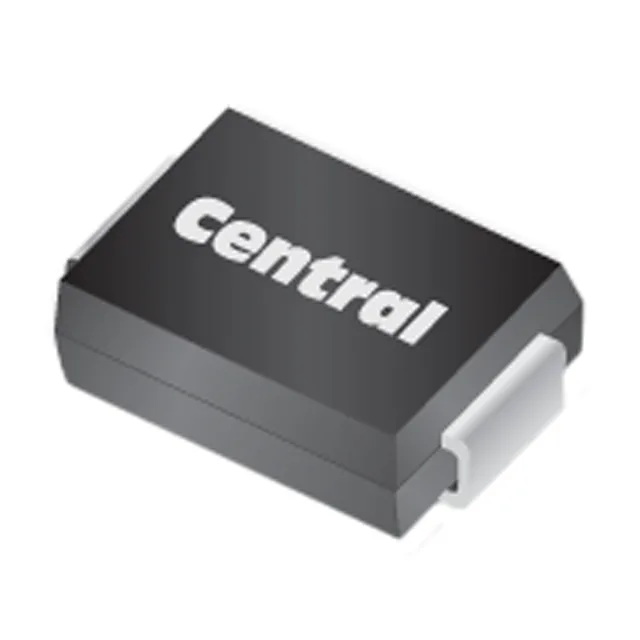
DO-214AB (SMC) is the standard surface-mount footprint for 1.5 kW TVS diodes — the same land pattern across most manufacturers means this part drops into a layout originally designed for any SMC-packaged 1.5 kW bidirectional suppressor without a board spin. Junction temperature range is -65°C to 150°C, which covers the full commercial and industrial envelope. The lower bound matters for cold-start and outdoor equipment; the upper bound is the usual derating ceiling for silicon avalanche suppressors. The part is bidirectional — a single channel that clamps both polarities. For an asymmetric rail or a differential signal line, the symmetric clamping characteristic is the intended behaviour, not a limitation.
Active lifecycle — what sourcing looks like
Central Semiconductor marks this part Active. No NRND notice or EOL event appears in the record. For a Zener TVS at this power class, second-source alternatives in the same SMC package are maintained by multiple suppliers — worth qualifying if the BOM carries a sole-source risk.