What the 1500W rating means for your protection design
The 1.5SMC160A TR13 PBFREE: That 1500W figure is the maximum power the die can absorb in a single pulse before the junction temperature exceeds its safe limit; it does not mean continuous dissipation. For a given transient energy, the clamping voltage determines how much current the device can shunt: at 219V clamping, the rated peak pulse current is 6.8A. Breakdown occurs at a minimum of 152V, and the clamping voltage peaks at 219V under full surge current. That 83V window between standoff and clamp is the protection margin: a 136V rail sees the TVS hold off until a transient pushes past 152V, then the device clamps the spike to 219V or below.
DO-214AB SMC package and board integration
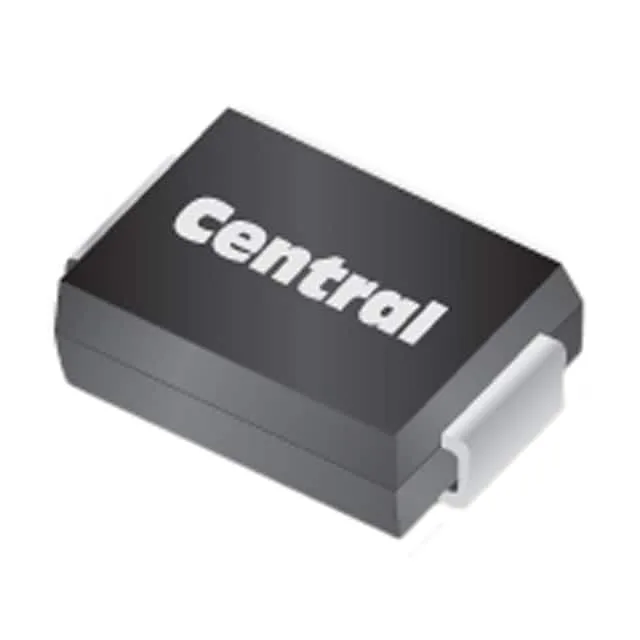
Housed in a DO-214AB (SMC) surface-mount package, the 1.5SMC160A occupies a standard footprint shared across the 1.5SMC family. The SMC body is larger than the smaller SMA/SMB siblings — the extra copper area under the terminals helps conduct pulse heat into the PCB copper pour. For a 1500W-rated part, the board-side thermal pad and via count under the package directly affect how many consecutive pulses the device can survive before the junction drifts out of spec. The part is a single unidirectional channel — cathode band on the package marks the grounded side. In a DC rail application, the anode connects to the protected line and the cathode to ground; reverse polarity or AC lines require a bidirectional device instead.
Active lifecycle and sourcing posture
The TR13 suffix indicates Tape & Reel packaging; Cut Tape quantities are also available for prototyping or low-volume builds. Operating temperature range spans -65°C to 150°C junction, covering military-temperature applications and high-ambient environments such as power supplies or automotive engine compartments.