0.6 µA timekeeping — battery-life budget for portable gear
The DS1337C#T&R: Timekeeping current draws a maximum of 0.6 µA at 1.3 V to 1.8 V on the backup supply. For a product that spends most of its life on a coin cell, that current sits below the battery's self-discharge rate — a 225 mAh CR2032 lasts over 40 years in theory, so the cell's shelf life, not the RTC, sets the backup duration.
I²C interface and 16-SOIC wide-body — layout and bus-fit
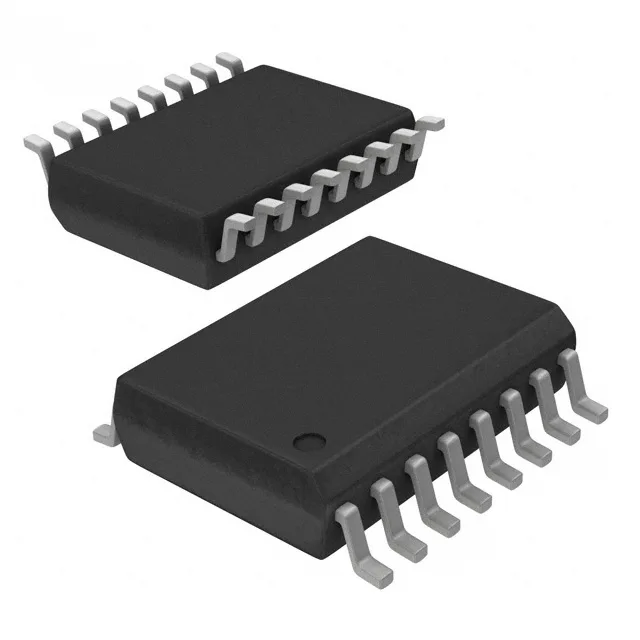
The I²C (2-wire serial) interface uses the standard SDA/SCL pair, so the DS1337C#T&R sits on any I²C bus without dedicated chip-select lines. The 16-SOIC wide-body package (7.50 mm body width) matches the footprint used by many other RTCs and EEPROMs — a single PCB land pattern can serve multiple BOM options. An outdoor IoT node or an enclosure near a motor drive that sees 70 °C ambient still has margin before the RTC drifts or fails to communicate.
Alarm, leap year, square wave — firmware overhead savings
On-chip features include an alarm comparator, automatic leap-year correction through 2099, and a programmable square-wave output. The alarm output can wake a sleeping microcontroller without polling the RTC, saving firmware complexity and bus traffic. The square wave (selectable frequencies) serves as a low-jitter clock for a secondary timer or a watchdog heartbeat.