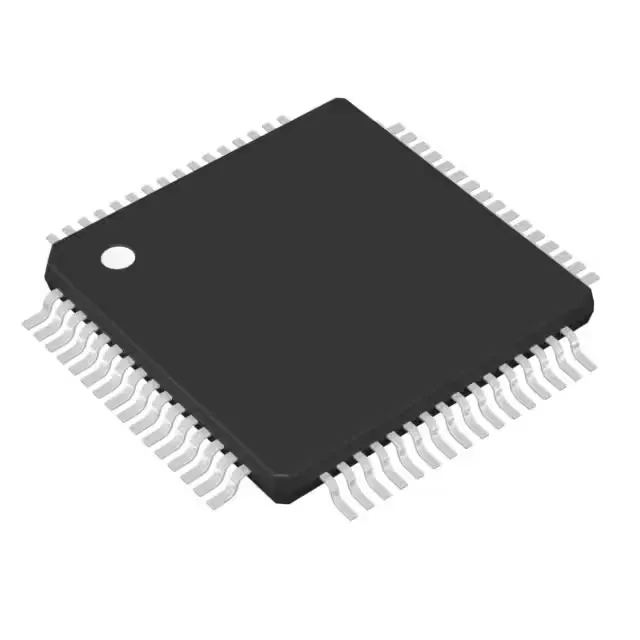
The TM4C123GH6PMT7 runs a single-core ARM Cortex-M4F at 80 MHz, which puts it in the sweet spot for real-time control loops that need a hardware FPU for sensor fusion or PID math without a dedicated DSP coprocessor. 256 KB of Flash and 32 KB SRAM are enough for a moderate firmware stack — think motor-drive commutation, USB CDC/ HID device firmware, or a CANopen node with a handful of PDOs. The 2 KB EEPROM emulation space covers calibration constants or boot-count logging without wearing the Flash.
Connectivity and I/O — CAN plus USB OTG on one die
The 12-bit ADC with 12 channels covers analog feedback on a three-phase motor driver plus a few thermistors.