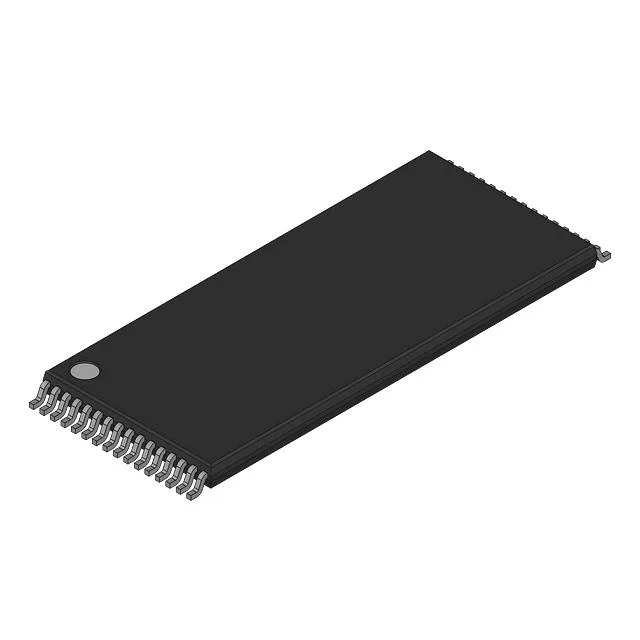
The NM27C020T200 is a 2 Mbit (256K x 8) parallel EPROM from ON Semiconductor, organized as 256K words of 8 bits each. It is a non-volatile memory device intended for code storage in embedded systems where the firmware is programmed once (or a limited number of times) using a UV eraser. The 200 ns access time suits it for use with 8-bit microcontrollers, DSPs, and ASICs that require a parallel boot or program memory interface running at moderate clock speeds. Typical applications include industrial controllers, telecom line cards, test equipment, and legacy processor boards that rely on parallel EPROM for firmware.
For a system running at 5 MHz or slower, this timing leaves comfortable margin for address decode, chip-select propagation, and bus turn-around. At higher clock rates (e.g., 10 MHz or above) the 200 ns window may force wait states unless the memory controller can stretch the read cycle. If your target system uses a faster bus — 100 ns or 120 ns class — the NM27C020T200 will not meet the setup/hold window without additional logic or a slower clock divider.
For extended-temperature or automotive applications, a different EPROM or Flash variant would be needed.
The NM27C020T200 is supplied in a 32-pin TSOP (Thin Small Outline Package), surface-mount form factor. The TSOP footprint is common for parallel EPROMs and Flash memories in the 32-pin width, so board layout reuse across similar density devices is straightforward. The 'Bulk' package type indicates it ships in tubes or trays, not tape-and-reel — something to confirm with your assembly house if you need reeled parts for automated pick-and-place.
That said, EPROM technology is a mature, low-volume niche — most new designs have migrated to Flash or EEPROM for in-system reprogrammability. For production builds or long-life equipment that still specifies this exact part, we recommend securing a multi-year supply commitment or qualifying a pin-compatible Flash alternative as a second source.