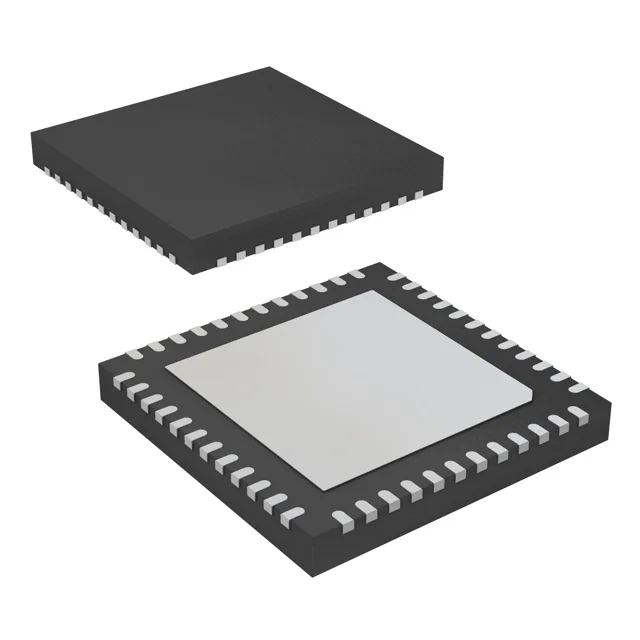
The 50 MHz Cortex-M3 core delivers enough throughput for time-critical tasks like PWM generation, sensor polling, and UART/SPI communication without an external coprocessor. The internal oscillator eliminates the crystal, saving board space, though an external clock can be used if tighter timing accuracy is needed. With 28 GPIOs and I2C, SPI, SSI, and UART/USART connectivity, this part covers typical distributed-control node requirements — think a small motor drive or a remote I/O module that needs to talk over multiple serial buses.
Memory sizing for the firmware budget
The 8 KB RAM handles moderate data buffers and stack depth; designs that need larger frame buffers or extensive logging should plan for external memory or a higher-density sibling. The Flash is field-programmable, so firmware updates are possible in-system.
Integration note: peripherals and analog
The eight-channel 10-bit ADC samples at sufficient rate for slow-to-medium sensor feedback (temperature, current, position). The 28 I/Os are shared with the serial interfaces; plan the pin allocation early to avoid conflicts between the ADC inputs and the SSI or UART pins.