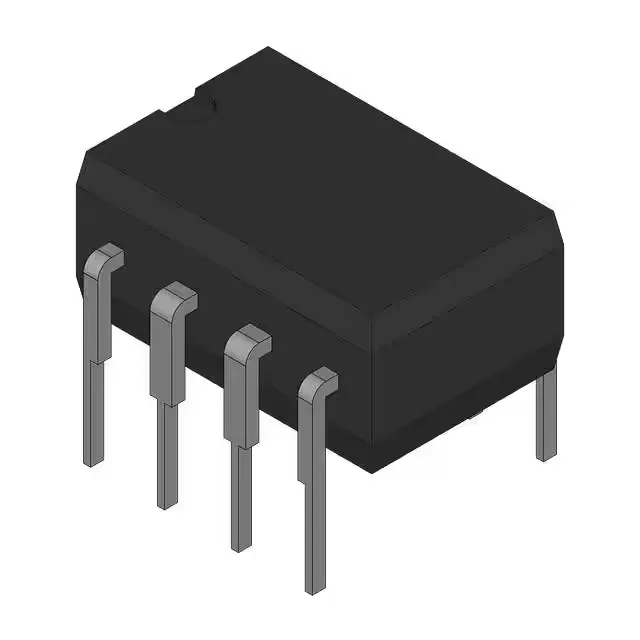
LM386N-4

Texas Instruments

Texas Instruments LM386N-4, Class AB audio amplifier, 1-Channel (Mono), 1W x 1 @ 8Ω, 5V ~ 18V supply, 0°C~70°C, 8-DIP (0.300", 7.62mm) through hole, Tube.

Texas Instruments LM386N-4
Download datasheet (PDF)
[ALLOC] Allocation Sourcing · Shortage Support
$1.68/ pc

Volume pricing available from 1,000+ pcs per order.

MOQ 1 · Tube · RoHS · EIA-481 · DAP/DDP · T/T

Technical specifications

LM386N-4 specifications
Parameter / AttributeSpecification / Value
TypeClass AB
Output type1-Channel (Mono)
MountingThrough Hole
Supply voltage5V ~ 18V
Max output power x channels @ load1W x 1 @ 32Ohm
Operating temperature0°C~70°C(TA)
PackageTube
Case8-DIP (0.300\", 7.62mm)
100% Footprint Match · Solder-Ready (No PCB Redesign Needed)

Need Stock or a Drop-in Second-Source for LM386N-4?

Package: DIP-8 / SOIC-8 · Pin-compatible replacements with immediate Shenzhen spot stock

Footprint Match 98%
Supply Chain & Allocation Reality:

The LM386 is the amplifier of every pocket radio, intercom and talking toy of the last forty years - 8 pins, a default gain of 20, and a design so forgiving that a working amp fits on a thumbnail. The suffix map confuses people who over-read it: N means DIP, M means SOIC, and the numbers that follow are voltage and power classes, not different chips - though the class matters: an N-1 runs to 12V, an N-4 to 18. The gain story is one capacitor between pins 1 and 8, from 20 to 200, with a resistor in series for anything in between. And the clone market (the JRC/NJM row and the Chinese fabs) is old and mostly benign here - the part is simple enough that even copies behave.

Verified Pin-Compatible Replacements (3 verified alternatives)

LM386N-4 TI (National lineage) DIP-8
100% Drop-in (Zero Code Change)
Availability & Target Pricing:

The High-Voltage Member of the Row

Shenzhen Spot Stock (24-48h Dispatch)

Electrical & Core Specs:

The 18V-class member (against the N-1s 12V): about 1W into 32 ohms at 16V against the 250-325mW class of the basic grade - same die family, same pins, more ceiling.

5V to 18V (22V absolute) against the N-1/N-3s 4-12V window: the reason it exists.

Compatibility & Drop-In Notes: The substitution discipline is voltage arithmetic: an N-4 serves everywhere the lower classes did (with more headroom), while putting an N-1 into a 12V design ends its life at the first full-volume note. Read the suffix before the voltage rail finds it.
Package & Solder Footprint: Same DIP-8 pinout across every class and every clone.
Shenzhen Warehouse Stock & MOQ: Stocked across classes; verify the suffix on the marking.
JRC386 JRC / NJR (Nisshinbo) DIP-8
100% Drop-in (Zero Code Change)
Availability & Target Pricing:

The Classic Japanese Clone Row

Shenzhen Spot Stock (24-48h Dispatch)

Electrical & Core Specs:

The JRC/NJM-labeled member of the same design: identical pinout, gain pins and behavior - the part many Japanese and Chinese consumer radios were actually built with.

Per the sub-grade; match the voltage class when replacing.

Compatibility & Drop-In Notes: For restoration work the JRC-labeled part is often the period-correct choice; electrically the family is one design and the datasheets agree on the pinout.
Package & Solder Footprint: DIP-8, standard pinout: 1 gain, 2 minus input, 3 plus input, 4 ground, 5 output, 6 supply, 7 bypass, 8 gain.
Shenzhen Warehouse Stock & MOQ: Stocked for radio and toy repair; documented rows.
LM386M-1 TI SOIC-8
Functional Equivalent
Availability & Target Pricing:

The Surface-Mount Form

Shenzhen Spot Stock (24-48h Dispatch)

Electrical & Core Specs:

The SOIC-8 member (M suffix) of the 12V-class grade: same die, same gain behavior, a smaller thermal envelope.

The 4-12V class of the N-1/N-3 row.

Compatibility & Drop-In Notes: Package, not personality: the M-suffix datasheet carries the same gain table and pin functions - the work in a repair is the footprint, not the circuit.
Package & Solder Footprint: SOIC-8 against DIP-8: the substitution into a DIP socket needs the adapter route; the reverse is a board decision.
Shenzhen Warehouse Stock & MOQ: Reeled stock for production and SMD repair.
Buyer & Quality Checklist for Sourcing Alternatives
  • Decode the suffix once: N = DIP, M = SOIC, and the trailing number is the voltage/power class (N-1 and N-3 in the 12V window, N-4 to 18V). Same amplifier inside; match the class to the rail.
  • The gain is external: pins 1 and 8 open give 20 (26dB, the internal 1.35k resistor); a 10uF capacitor between them gives 200; a resistor in series with the capacitor lands anywhere between. Repairs that fit the capacitor by habit change the design gain.
  • At high gain, bypass the unused input (small capacitor or short to ground) or the amplifier finds instability instead of signal - the classic hiss-and-oscillate complaint.
  • The output sits at half the supply by design: the output coupling capacitor is mandatory into any speaker or following stage - its absence is a dead short to the speaker coil at DC.
  • The classic 386-family instability cures still apply: the pin 7 bypass capacitor, tight supply decoupling, and short output traces. On breadboards this part will teach the lesson whether asked or not.
  • Clone rows are electrically faithful in this part (unlike many in this catalog) - but buy by grade, not just by name: a 12V design wants a 12V-labeled class on the body.
Frequently Asked Technical Questions

Q: What do the LM386 suffixes mean?

A: Package and voltage class: N is DIP, M is SOIC; the trailing number is the class (N-1 and N-3 run to 12V, N-4 to 18V). The amplifier inside and the pinout are the same across the row.

Q: How do I set the gain of an LM386?

A: Pins 1 and 8: open gives the default 20 (internal 1.35k resistor); a 10uF capacitor across them gives 200; a resistor in series with the capacitor sets anything between. At high gain, bypass the unused input or the stage goes unstable.

Q: Is JRC386 the same as LM386?

A: Electrically yes - the JRC/NJM-labeled rows follow the same pinout and gain behavior, and the simple circuit means clones perform honestly. Match the voltage class and treat it as a period-correct restoration part.

Technical details

LM386N-4
[ALLOC] verified
Quote