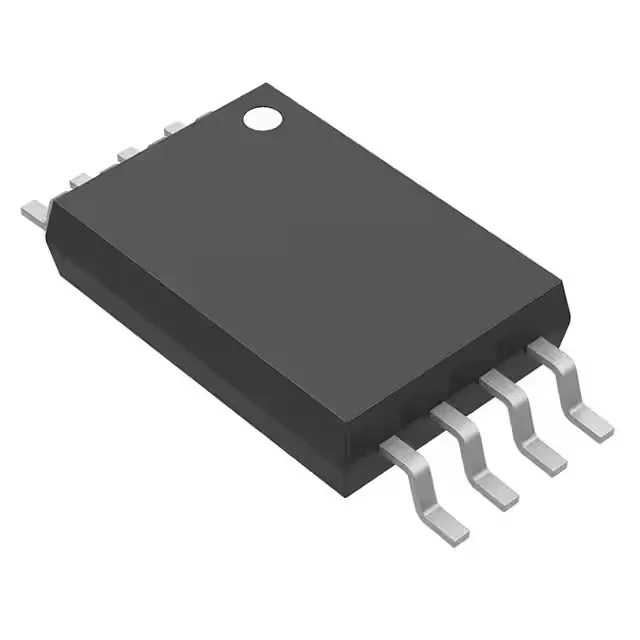
2.5V shunt reference in an 8-TSSOP — what it does
The shunt topology means it can sink or source current, which is handy when the load is pulling in both directions. Output tolerance is ±1.5 %, which puts it in the general-purpose accuracy tier — fine for a 10-bit ADC reference or a threshold setpoint, but you would reach for a tighter grade (0.5 % or better) if the system runs a 12-bit converter without calibration. The 8-TSSOP package is small — 4.40 mm wide — and surface-mount, so it fits on a compact board without hogging real estate. The 0.65 mm pin pitch is manageable with a standard iron if you are doing rework, but the small body makes it fiddly; a hot-air station is easier than a fine-tip iron for removal.
Noise, drift, and the 20 mA ceiling
For a 2.5 V reference that works out to roughly 48 ppm of the output — acceptable for a 10-bit system, but if you are feeding a 16-bit SAR ADC, that noise floor eats into the LSB budget and you would want a lower-noise reference or a post-filter. Temperature coefficient is 20 ppm/°C typical. That is the kind of drift you can live with in an industrial setpoint that gets trimmed at room temperature, but not for a precision measurement channel that spans the full temperature range. Maximum output current is 20 mA, and the minimum cathode current is 20 µA. The 20 mA ceiling limits how much load the reference can drive directly — if your ADC reference input draws 5 mA and you have a 10 mA pull-down elsewhere, you are fine. But do not try to power an op-amp supply rail from it.
The LM385BPWG4-2-5 is listed as obsolete. Texas Instruments no longer manufactures this specific variant in the 8-TSSOP package. Because it is obsolete, availability is spotty and pricing varies with remaining stock. Expect to work with a procurement specialist to confirm the quantity and lead time before committing the BOM.