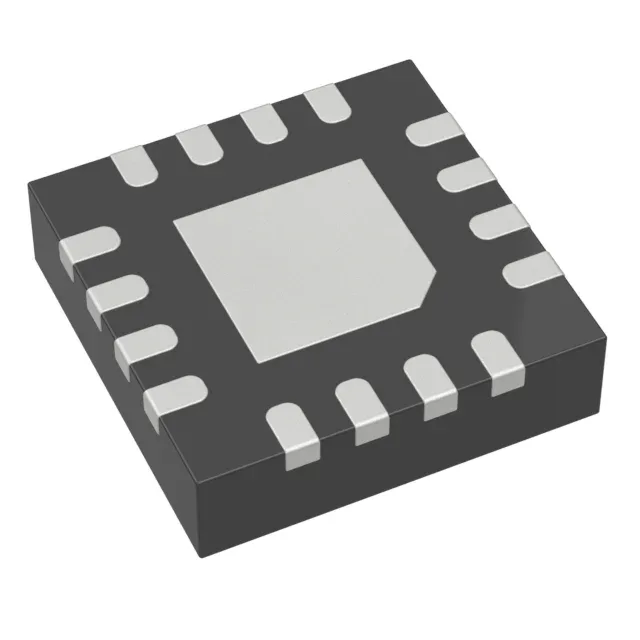
Texas Instruments DRV8876RGTR — Microcontrollers & Processors (MCU / MPU / DSP)

DRV8876RGTR Texas Instruments Motor Driver, 3.5 A, 37 V

MPNDRV8876RGTR
End of Life

Texas Instruments DRV8876RGTR motor driver, fully integrated control and power stage, NMOS, PWM interface, 3.5 A output, 4.5-37 V load, 16-VFQFN exposed pad package.

$2.16Ref. price · indicative, final on quote
Packaging16-VFQFN Exposed Pad
RoHSROHS3 Compliant
Independent supplier — new & surplus stockAuthenticity-screened · ESD-safe packingListing updated Aug 2026

Specifications

DRV8876RGTR specifications
ParameterValue
MountingSurface Mount
Motor type - AC, DCBrushed DC
Motor type - stepperUnipolar
Voltage - load4.5V ~ 37V
Supply voltage0V ~ 5.5V
Output current3.5A
InterfacePWM
Operating temperature-40°C ~ 125°C (TA)
PackageTape & Reel (TR); Cut Tape (CT)
FunctionDriver - Fully Integrated, Control and Power Stage
TechnologyNMOS
ApplicationsDC Motors, General Purpose, Stepper Motors
Case16-VFQFN Exposed Pad
Output configurationHalf Bridge (2)

Product details

3.5 A continuous output — what it means for motor selection

The DRV8876RGTR: Rated for 3.5 A continuous output current, this driver handles brushed DC motors and unipolar stepper motors up to that current.

PWM interface and half-bridge topology

The driver accepts a PWM input directly from an MCU timer output — no external DAC or analog reference needed. Two half-bridge outputs (NMOS) let it drive one brushed DC motor bidirectionally or a unipolar stepper with external sequencing logic.

Housed in a 16-VFQFN with exposed pad (3x3 mm), the DRV8876RGTR requires a surface-mount reflow profile.

The ROHS3 compliance (no RoHS exemptions) clears it for EU-market builds without a substance-restriction waiver.

Frequently asked questions

Does DRV8876RGTR replace DRV8811PWPR without a board spin?

No. The DRV8811PWPR has four half-bridge outputs (bipolar stepper support) and a different package (HTSSOP-28). The DRV8876RGTR offers two half-bridges in a 16-VFQFN — the pinout, package, and output topology differ, so a board redesign is required.