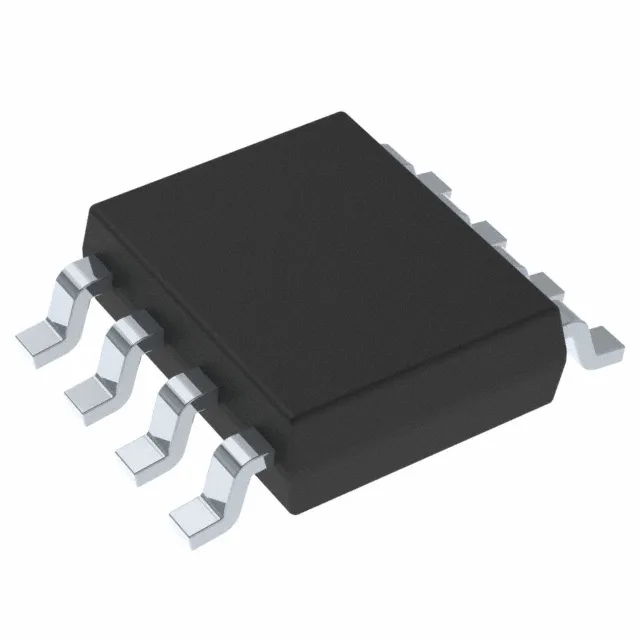
Texas Instruments DRV8871DDAR — Power Management (PMIC / Gate Driver)

DRV8871DDAR Brushed DC Motor Driver, 3.6 A, 6.5-45 V

MPNDRV8871DDAR
Active

Texas Instruments DRV8871DDAR, Fully Integrated Full-Bridge Motor Driver, NMOS, PWM Interface, 3.6 A Output, 6.5 V to 45 V Supply, -40°C to 125°C, 8-PowerSOIC PowerPad.

$3.0800Ref. price · indicative, final on quote
Independent supplier — new & surplus stockAuthenticity-screened · ESD-safe packingListing updated Jul 2026

Specifications

DRV8871DDAR specifications
ParameterValue
MountingSurface Mount
Motor type - AC, DCBrushed DC
Motor type - stepperUnipolar
Voltage - load6.5V ~ 45V
Supply voltage6.5V ~ 45V
Output current3.6A
InterfacePWM
Operating temperature-40°C~125°C(TA)
PackageTape & Reel (TR); Cut Tape (CT)
FunctionDriver - Fully Integrated, Control and Power Stage
TechnologyNMOS
ApplicationsDC Motors, General Purpose, Stepper Motors
Case8-PowerSOIC (0.154\", 3.90mm Width)
Output configurationFull Bridge

Product details

The DRV8871DDAR is a fully integrated full-bridge motor driver from Texas Instruments, built with NMOS transistors and controlled via a single PWM input. It delivers 3.6 A continuous output current, enough to drive small brushed DC motors and unipolar stepper motors in industrial and automotive applications.

6.5 V to 45 V — one driver for multiple rail voltages

Both the supply voltage and the motor load voltage share the same 6.5 V to 45 V operating range. That means the same part can run from a 12 V automotive battery, a 24 V industrial rail, or a 48 V telecom supply without re-spinning the BOM. The wide margin also absorbs transients on unregulated buses.

This pad is the primary heat path; the PCB layout must include a matching copper land and thermal vias to the inner or bottom layers. Without adequate copper area, the 3.6 A output current will be thermally limited well below the electrical rating.

Frequently asked questions

What is the output current of DRV8871DDAR?

The DRV8871DDAR is rated for 3.6 A continuous output current. This is the full-bridge NMOS output stage, so the current flows through the integrated H-bridge — no external FETs needed. The actual sustained current depends on the thermal design of the PCB (PowerPad copper area).