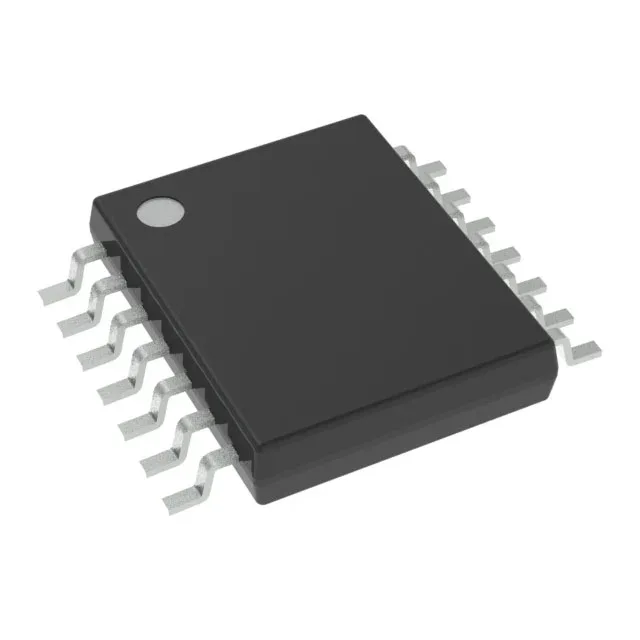
Single-cell linear charger — 30 mA ceiling, tiny cells only
This is not a general-purpose battery charger — the 30 mA ceiling limits it to very small cells: coin cells, thin-film batteries, or micro-pouch cells used in wearables, medical patches, wireless sensors, and IoT endpoints where the charge current is measured in milliamps, not amps. The charge current and charge-termination timer are programmable via external resistors. Short-circuit fault protection is built in. The maximum supply voltage is 10 V.
14-TSSOP — rework-friendly, no hidden thermal pad
The BQ24901PWRG4 comes in a 14-TSSOP package (0.173" body width, 4.40 mm). For a board rework technician, this is a straightforward part: no exposed thermal pad underneath, no BGA complexity. The surface-mount TSSOP-14 footprint is well-documented and common. The pin pitch is hand-solderable with a fine-tip iron, though hot-air rework is faster for removal.
Obsolete — no official replacement on record
The BQ24901PWRG4 carries an official product status of Obsolete. This means the part cannot be sourced through normal TI distribution channels as a current-production item. The field reads 'current', which may indicate the design or datasheet is still considered valid by TI, but the product status overrides that — this part is end-of-life. For a new design, do not select this part.
What the 30 mA ceiling means for your BOM
A 30 mA max charge current is roughly 1/10th of what a typical smartphone charger delivers. This part is sized for cells with capacities in the 100-300 mAh range — think a Bluetooth earbud, a medical glucose sensor, or a smart tag. The constant-current charge phase is set by an external resistor; the timer terminates charging after a programmable period as a safety backup. The 4.2 V battery pack voltage is the standard full-charge voltage for a single-cell Li-ion or Li-polymer cell. The short-circuit protection is the only fault safeguard listed — there is no over-voltage, over-temperature, or reverse-battery protection on this die, so the BOM designer should add external protection if the application demands it.