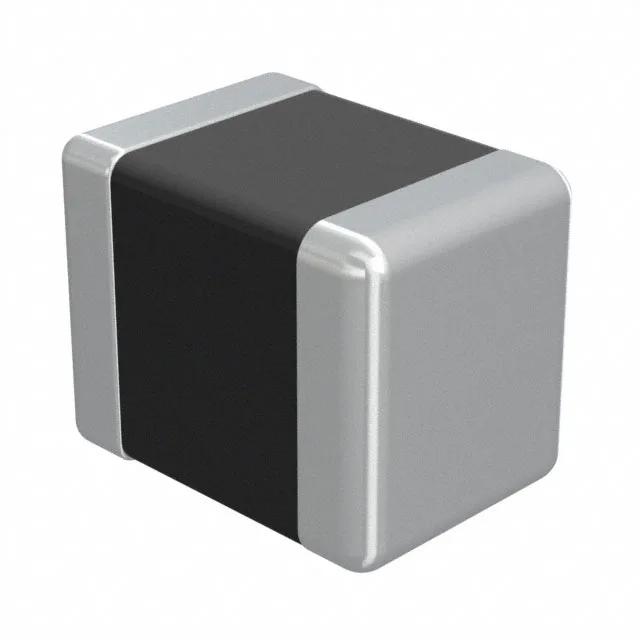
NRND lifecycle — what it means for your BOM
The LBC2518T220K: This is not a full EOL notice — the part remains available for existing designs, but the manufacturer signals that a replacement or alternative should be evaluated before the next production spin. For a BOM that already carries this order code, the NRND status means last-time-buy windows are the procurement horizon.
22 µH, 250 mA — the load-bearing specs
The 22 µH inductance is tested at 2.52 MHz, a standard test frequency for this value range. The 250 mA current rating is the DC current at which the inductance typically drops by 10 % — the actual saturation knee may be higher, but this is the safe design limit. DC resistance is 770 mOhm, which at 250 mA produces a 48 mW self-heating — negligible in most circuits but worth factoring into a thermal budget if the inductor sits near temperature-sensitive components. Self-resonant frequency is 19 MHz. Above this frequency the inductor behaves capacitively; practical filtering and DC-DC converter applications should stay well below this point — typically below 5 MHz for a 22 µH part.
Unshielded 1007 package — board-fit note
Unshielded construction means the magnetic field extends beyond the component body. In a dense PCB layout, keep a clearance of at least one part width (2.5 mm) from other inductors or sensitive traces to avoid coupling. It is a standard surface-mount size compatible with most pick-and-place equipment and reflow profiles. Operating temperature range is -40°C to 105°C, covering industrial and automotive cabin environments. No moisture sensitivity level is listed, but the tape-and-reel packaging (cut tape available) is standard for production reels.