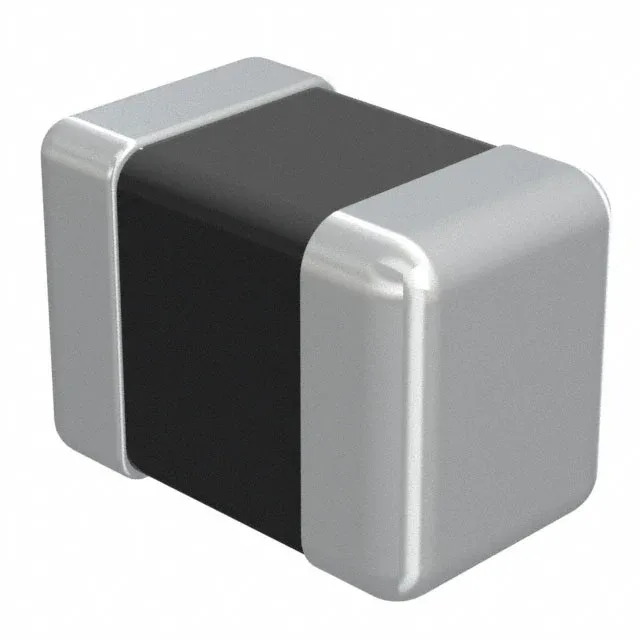
22 µH at 130 mA — the DCR tells the story
The LBC2012T220K: Rated 22 µH ±10% at 2.52 MHz test frequency, with a DC resistance of 3.7 Ohm and a current rating of 130 mA. The 3.7 Ohm DCR means the inductor drops 0.48 V at full rated current — in a 3.3 V rail that's a 14.5% voltage loss before the load sees any power. For low-voltage supply lines, that DCR eats into the headroom faster than the inductance value. Self-resonant frequency is 16 MHz. Above that point the parasitic capacitance between windings dominates and the part behaves like a capacitor. In a switching converter running at 1-2 MHz, this inductor is well below SRF and the impedance is inductive — but keep the SRF in mind if you're using it in a filter above 8 MHz where the margin thins.
That means it's still orderable for existing production, but the manufacturer has flagged it for eventual end-of-life. No new designs should target this order code — the supply window is finite and the last-time-buy date, if not already passed, is approaching. For a line that already uses LBC2012T220K, secure enough stock for the remaining build horizon; for a new BOM, pick a current-series alternative. If your application sees sustained 105°C ambient, the DCR will climb with temperature and the current derating curve from the datasheet applies.
0805 footprint — rework and board-fit
0805 (2012 Metric) surface-mount package, 2.00 mm x 1.25 mm footprint, seated height 1.45 mm max. The unshielded construction means the winding is exposed — the hot-air rework profile is straightforward: preheat the board to 150°C, hit the part with 300°C air for 5-8 seconds, and lift it with tweezers. No thermal pad underneath, so the pad layout is just the two end-terminals. The ±10% tolerance is standard for wirewound inductors in this value range.