PNP Darlington in a TO-220 — what the ratings mean for your BOM
The TIP127 is a PNP Darlington transistor rated for 100 V collector-emitter breakdown and 5 A continuous collector current — sized for medium-current switching and linear applications where the Darlington pair's high gain eliminates a separate driver stage. Minimum DC current gain of 1000 at 3 A collector current and 3 V Vce means the base drive requirement stays under 3 mA for a 3 A load — a logic-level signal from a 5 V microcontroller can switch it directly through a series resistor. Vce saturation is 4 V maximum at 20 mA base current and 5 A collector current — the 4 V ceiling is the voltage dropped across the collector-emitter junction when fully on, so the load sees about 96 V from a 100 V rail at full current. Maximum power dissipation is 2 W — at 5 A the Vce(sat) drop of 4 V produces 20 W instantaneous, so the transistor must be pulsed or heatsunk to stay within the 2 W continuous limit; the TO-220 tab is the primary thermal path.
Obsolete — sourcing reality for the TIP127
Sourcing runs through independent distribution and surplus channels; quantities are lot-specific and confirmed at RFQ time. The TO-220 package is a standard footprint, so a pin-compatible replacement from another manufacturer may fit the same PCB land pattern — verify the pinout against the existing BOM position before committing. RoHS3 compliant per the lifecycle record — no additional compliance documentation (REACH, UL, IEC) is on file for this part number.
Package and thermal handling — TO-220 through-hole
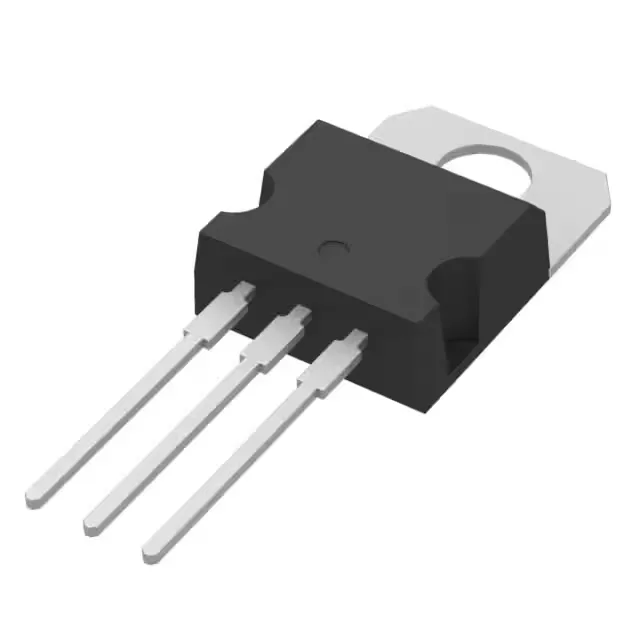
Supplied in a TO-220-3 through-hole package (supplier device package TO-220) — the three-lead tabbed package mates with standard 0.100-inch pitch PCB holes and accepts a clip-on or screw-down heatsink on the metal tab. Operating junction temperature rated to 150°C — the 2 W power limit must be derated above 25°C ambient; a heatsink with adequate thermal resistance keeps the junction below the maximum during continuous operation. Packaged in Tube format — the tube protects the leads during handling and feeds into through-hole insertion equipment without reel or tape tooling.