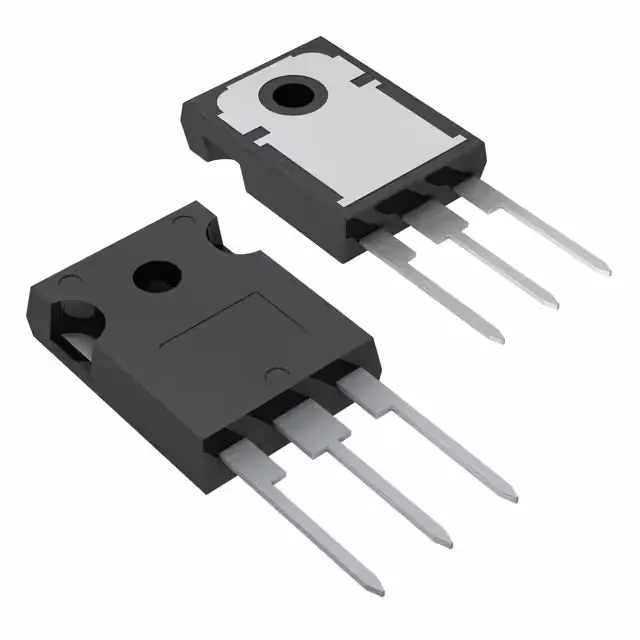
STMicroelectronics STTH6003CW — Discrete Semiconductors

STTH6003CW 300V 30A Ultrafast Diode, 55 ns trr, TO-247-3

MPNSTTH6003CW
Active

STMicroelectronics STTH6003CW, dual ultrafast diode, 300 V Vrrm, 30 A per diode, 55 ns trr, 1.25 Vf at 30 A, common-cathode pair, TO-247-3, 175°C Tj max, ROHS3.

$4.2000Ref. price · indicative, final on quote
PackagingTO-247-3
RoHSROHS3 Compliant
Independent supplier — new & surplus stockAuthenticity-screened · ESD-safe packingListing updated Aug 2026

Specifications

STTH6003CW specifications
ParameterValue
MountingThrough Hole
Voltage - DC reverse (Vr)300 V
Voltage - forward (Vf) (Max) @ if1.25 V @ 30 A
Current - reverse leakage @ vr60 µA @ 300 V
Current - average rectified (Io) (per diode)30A
Operating temperature - junction175°C (Max)
SpeedFast Recovery =< 500ns, > 200mA (Io)
PackageTube
TechnologyStandard
CaseTO-247-3
Diode configuration1 Pair Common Cathode
Reverse recovery time55 ns

Product details

55 ns trr — the switching loss number that matters

The STTH6003CW from STMicroelectronics is a dual ultrafast rectifier rated 300 V reverse voltage with 30 A average forward current per diode in a common-cathode pair. The 55 ns reverse recovery time is the headline parameter: it keeps the switching energy per cycle low enough that a hard-switched converter can run without a snubber eating the efficiency gain. The TO-247-3 package handles the thermal load from both dice on a single heatsink pad.

Forward drop and thermal headroom

Forward voltage is 1.25 V max at 30 A per diode — that is the conduction loss floor for the rectifier stage. With a 175°C maximum junction temperature, the device can sustain the full 30 A in a hot ambient if the heatsink is sized correctly. The 60 µA reverse leakage at 300 V is a sanity check for the blocking state; it rises with temperature, so the thermal model should include leakage power at the hot junction.

Frequently asked questions

What does the 55 ns reverse recovery time mean for my power supply design?

A 55 ns trr at 30 A places this diode in the ultrafast class — fast enough for 50-100 kHz hard-switched converters without excessive turn-off losses. At higher frequencies the recovery losses start to dominate the thermal budget; a SiC Schottky would be the next step up if the switching frequency exceeds 150 kHz.