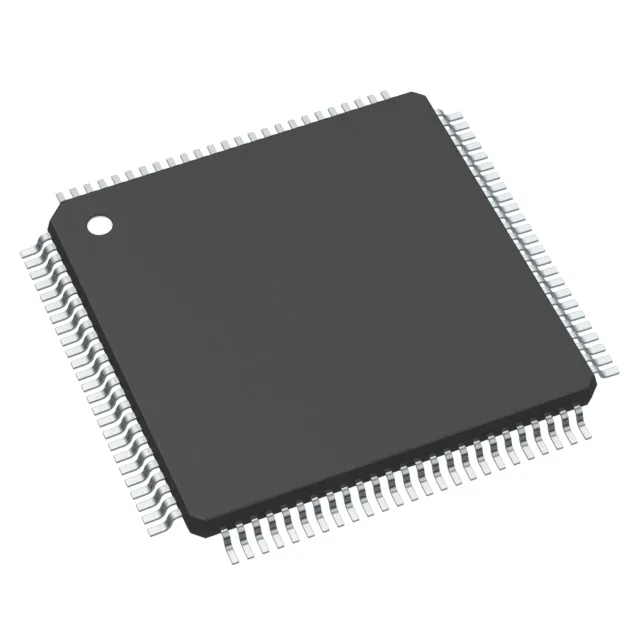
Renesas Electronics R5F56609FDFP#30 — Microcontrollers & Processors (MCU / MPU / DSP)

R5F56609FDFP#30 Renesas RX600 MCU – 120 MHz, 1 MB Flash

MPNR5F56609FDFP#30
End of Life

Renesas Electronics RX600 series, 32-Bit RXv3 MCU, 120 MHz, 1 MB FLASH, 128K x 8 RAM, 100-LQFP, -40°C to 85°C, ROHS3 Compliant

$7.06Ref. price · indicative, final on quote
Packaging100-LQFP
RoHSROHS3 Compliant
SeriesRX600
Independent supplier — new & surplus stockAuthenticity-screened · ESD-safe packingListing updated Aug 2026

Specifications

R5F56609FDFP#30 specifications
ParameterValue
SeriesRX600
MountingSurface Mount
Oscillator typeExternal, Internal
Program memory typeFLASH
Voltage - supply (Vcc (Vdd))2.7V ~ 5.5V
Operating temperature-40°C ~ 85°C (TA)
Speed120MHz
PackageTray
RAM size128K x 8
Core size32-Bit
EEPROM size32K x 8
PeripheralsDMA, LVD, POR, PWM, WDT
ConnectivityCANbus, EBI/EMI, I²C, LINbus, SCI, SPI
Number of i (O)90
Core processorRXv3
Case100-LQFP
Data convertersA/D 24x12b; D/A 2x12b
Program memory size1MB (1M x 8)

Product details

RXv3 core at 120 MHz — what the clock buys you

The R5F56609FDFP#30 runs a 32-bit RXv3 core at 120 MHz. That clock rate, combined with the 1 MB on-chip flash and 128 KB SRAM, gives you enough headroom for a real-time control loop with a moderate protocol stack — think CANopen or EtherCAT slave — without external memory.

Memory and I/O — sizing the BOM

Program memory is 1 MB of FLASH; data storage includes 128 KB SRAM and 32 KB EEPROM. The 90 available I/O lines and the peripheral set — DMA, LVD, POR, PWM, WDT — cover most sensor/actuator interfaces without glue logic. Connectivity includes CANbus, EBI/EMI, I²C, LINbus, SCI, and SPI. The 24-channel 12-bit ADC and dual 12-bit DAC handle analog front-end tasks directly.

Frequently asked questions

Is the R5F56609FDFP#30 a direct replacement for the R5F56609DDFP#30?

The R5F56609DDFP#30 shares the same RXv3 core, 120 MHz speed, memory sizes, and peripheral set. The only difference is the number of I/O: the DDFP variant has 89 I/O versus 90 on the FDFP. Check your pin allocation — if you use all 90 I/O, the DDFP will not fit without a redesign.