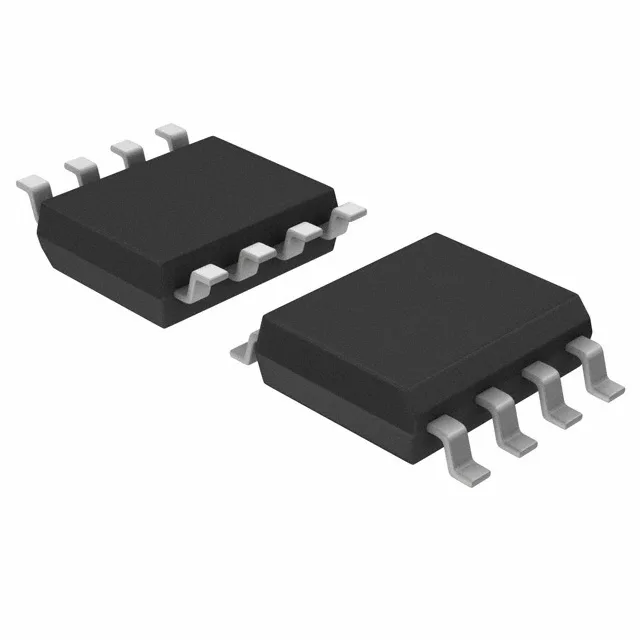
Dual-channel optocoupler for 10 Mbps isolated interfaces
The PS9817A-2-F3-AX from Renesas's NEPOC series is a two-channel optocoupler with open-collector outputs, rated for 10 Mbps data rate and 2500 Vrms isolation. It is designed for isolated digital signal transmission in industrial control, motor drives, PLC I/O modules, and isolated power-supply feedback paths where galvanic isolation is required between logic domains.
10 Mbps with 75 ns propagation delay — enough margin for most isolated SPI and UART links
The 10 Mbps data rate with a maximum propagation delay of 75 ns (tpLH / tpHL) is sufficient for isolated SPI at 5 MHz clock, isolated UART at standard baud rates up to 1 Mbps, and industrial fieldbus interfaces like RS-485 or CAN when used with an external transceiver. The 75 ns delay is symmetrical, which simplifies timing closure in bidirectional links. Rise and fall times of 20 ns and 5 ns typical keep the output edges clean enough for most logic families without excessive ringing, though a small series resistor at the output is still recommended to damp reflections on long traces.
15 kV/µs CMTI — why it matters for motor-drive and switching-power-supply isolation
Common-mode transient immunity of 15 kV/µs (minimum) means this optocoupler can reject the fast voltage slew rates present on the switching node of a motor-drive IGBT or a high-frequency power converter. A lower CMTI part would glitch or latch up under those conditions, causing false data or even output oscillation. This spec is the difference between a design that passes EMC testing and one that fails on the first motor start.
Open-collector output — flexible level shifting, but budget the pull-up
The trade-off is that an external pull-up resistor must be added per channel — factor that into the BOM count and board area.