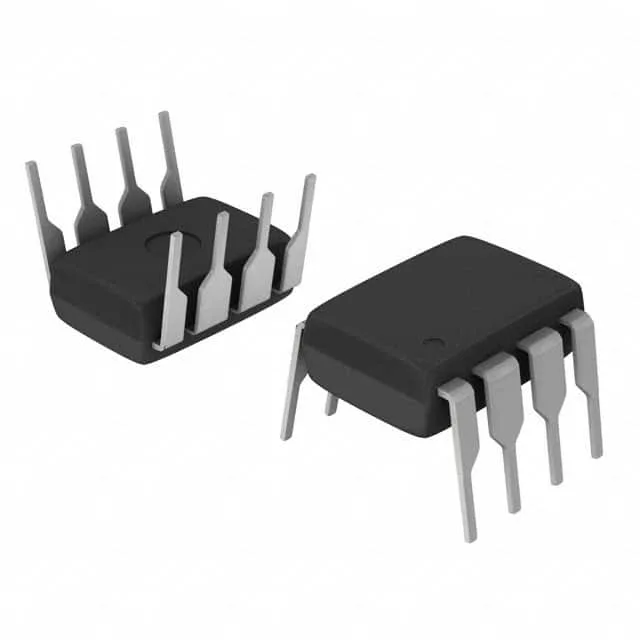
Renesas Electronics PS9531-V-AX — Optoisolators

PS9531-V-AX Gate Driver Optocoupler, 5000Vrms, 2.5A Peak

MPNPS9531-V-AX
End of Life

Renesas PS9531-V-AX optocoupler gate driver, 1-channel, 5000Vrms isolation, 2.5A peak output, 40ns rise/fall, 50kV/µs CMTI, 8-DIP through-hole, -40°C to 125°C.

$3.69Ref. price · indicative, final on quote
Packaging8-DIP (0.300", 7.62mm)
StockContact for availability
MOQ1 pcs
  • 100% new & originalTraceable channels only — no refurbs, no pulls, no remarked parts.
  • Date & lot codes on quoteStated per line before you commit; label photos on request.
  • MSL-compliant ESD packingMoisture-sealed bags with indicator cards; reels photo-verified.
  • PayPal buyer protectionPay by T/T, PayPal or Payoneer — card payments covered end to end.

Specifications

PS9531-V-AX Technical Specifications
ParameterValue
Mounting typeThrough Hole
Voltage - isolation5000Vrms
Voltage - output supply15V ~ 30V
Voltage - forward (Vf)1.56V
Current - peak output2.5A
Current - output high, low2A, 2A
Current - DC forward (If)25 mA
Operating temperature-40°C ~ 125°C
Pulse width distortion75ns
Approval agencyCSA, SEMKO, UL, VDE
PackageTube
TechnologyOptical Coupling
Case8-DIP (0.300\", 7.62mm)
Number of channels1
Rise (Fall time)40ns, 40ns
Propagation delay tpLH (tpHL)175ns, 175ns
Common mode transient immunity50kV/µs

Product details

Package and mounting

The Renesas PS9531-V-AX is a single-channel optical-coupling gate driver in an 8-DIP through-hole package, built to drive IGBTs and power MOSFETs in motor drives, industrial inverters, and switch-mode power supplies. Its 5000Vrms isolation rating handles the primary-to-secondary safety barrier, and the 2.5A peak output current charges the gate capacitance fast enough to keep switching losses under control. The 50kV/µs common-mode transient immunity means it won't latch or glitch when the high-side rail bounces — a common failure point in noisy inverter environments.

40ns rise/fall and 175ns propagation delay — timing budget for the gate drive

Rise and fall times are both 40ns typical, matched closely enough that the pulse-width distortion stays under 75ns. The maximum propagation delay (175ns low-to-high and high-to-low) is symmetrical, which simplifies dead-time calculation in half-bridge designs. For switching frequencies up to a few tens of kilohertz, these numbers leave comfortable margin; at higher frequencies you'll want to check the total delay against your switching period.

Supply range and input drive — what the LED side needs

The output-side supply runs from 15V to 30V, covering the typical gate-drive rails for IGBTs (usually +15V on and -5V to -10V off, though this part drives a single positive rail). The input LED forward voltage is 1.56V typical, and the maximum continuous forward current is 25 mA — standard logic-level drive from a 3.3V or 5V microcontroller output through a current-limiting resistor. No separate 5V logic supply is needed; the LED current sets the threshold.

Temperature range and approvals — industrial and safety-certified

Safety approvals from CSA, SEMKO, UL, and VDE cover the reinforced-insulation requirements for mains-connected equipment. The 8-DIP through-hole package is straightforward to hand-replace on a repair bench — a hot-air station or soldering iron works, no reflow profile needed.

Frequently asked questions

Is the PS9531-V-AX equivalent to HCPL-3120?

Both are single-channel gate-driver optocouplers in 8-DIP with 2.5A peak output and 5000Vrms isolation, so they are functionally similar. The PS9531-V-AX specifies a 50kV/µs CMTI versus the HCPL-3120's 15kV/µs typical, giving it an edge in high-noise environments. Pin compatibility should be verified against the respective datasheets before substitution.

Can PS9531-V-AX drive an IGBT?

Yes. The 2.5A peak output current and 40ns rise/fall times are sufficient to drive the gate capacitance of most medium-power IGBT modules (up to about 100A rating) at switching frequencies up to 20-30 kHz. The 5000Vrms isolation covers the safety barrier between the control logic and the high-voltage power stage.