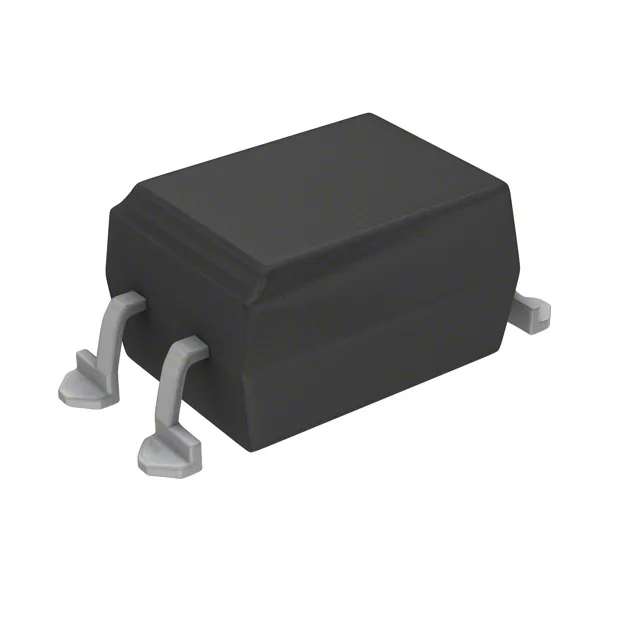
The PS2533L-1-A is a single-channel Darlington-output optocoupler from Renesas's NEPOC series, packaged in a 4-SMD Gull Wing for surface-mount assembly. Its headline rating is 5000Vrms isolation between input and output — a safety barrier sized for mains-referenced circuits, motor drives, and industrial PLC I/O modules where galvanic isolation is a regulatory requirement. The Darlington output stage delivers a current transfer ratio (CTR) of 1500% minimum to 6500% maximum at just 1 mA forward current, meaning a small LED drive signal can switch a much larger load on the output side. Output rating is 350V maximum and 150mA per channel, covering relay coil replacement, solenoid valves, and low-power AC/DC load switching.
Darlington vs. transistor output — the CTR difference matters
Compared to a transistor-output optocoupler like the PS2801C-4-V-A (which offers a 300mV Vce saturation and 5µs rise/fall times), the PS2533L-1-A's Darlington output trades switching speed for current gain. The Darlington's 1500% to 6500% CTR range at 1mA forward current means the LED can be driven with a fraction of the current needed for a transistor-output part to achieve the same output current — useful in low-power or battery-backed designs. The trade-off is slower switching: 100µs rise and fall times typical, versus 5µs and 7µs for the transistor-output peer. For 50/60 Hz line-frequency switching or DC load control, the Darlington's speed is adequate; for high-speed data or PWM above a few kilohertz, the transistor-output part is the better fit.
Surface-mount in a 4-SMD Gull Wing package (supplier device package 4-SMD). The Gull Wing leads provide a visible solder joint for inspection — a practical advantage over J-bend or leadless packages in production and rework. The -55°C low end also suits cold-climate or avionics bay installations where the board sees ambient cold soak.