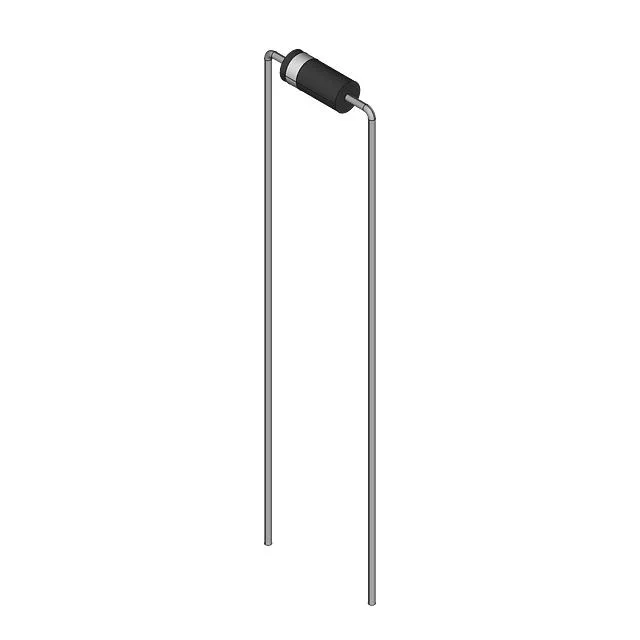
The N413 is a DIAC — a bidirectional trigger diode — with a maximum breakover voltage of 40 V. It is used in AC phase-control circuits such as triac gate triggers in lamp dimmers, motor speed controls, and heater regulators. The DIAC provides a symmetrical switching characteristic that ensures consistent firing of the triac at both half-cycles of the AC mains waveform.
The 40 V (BO) MAX rating is the voltage at which the DIAC switches from its high-impedance blocking state to a low-impedance conducting state. In a typical dimmer circuit, the DIAC is placed between the timing capacitor and the triac gate; when the capacitor voltage reaches the DIAC's breakover threshold, the DIAC fires and triggers the triac. The 40 V maximum sets the upper bound for the trigger voltage, so the RC timing network must be designed to reach that threshold within the desired conduction angle. A DIAC with a lower breakover voltage would fire earlier in the cycle, delivering more power to the load.
Lifecycle and compliance — what to expect for the BOM
However, it is RoHS non-compliant, so it cannot be used in products that must meet EU RoHS or similar lead-free directives. This part is typically specified in legacy or exempt industrial equipment where leaded solder is still permitted.
Packaging and handling note
The N413 is — loose parts in a bag or tube, not on tape-and-reel. This is typical for through-hole or large-body components used in low-volume or repair applications. For automated pick-and-place assembly, verify that the part can be hand-loaded or request a tape-and-reel variant if one exists in the family.