What the ISL94216IRZ does in a battery pack
It monitors up to 16 series-connected cells and communicates over I²C or SPI to a host microcontroller. The industrial temperature range (-40 to 85°C) suits outdoor and enclosure-based battery systems — think energy storage, UPS, e-bike packs, or backup power where the electronics live near the cells.
Sixteen cells is a lot of series voltage. A 16-cell Li-ion stack runs over 60 V fully charged, so the ISL94216IRZ handles the high-side level shifting internally — no external resistor dividers for each cell. That saves board area and BOM count compared to daisy-chaining multiple lower-count monitors. The multi-chemistry support means you can switch between Li-ion, LiFePO4, or other chemistries in firmware without a hardware change, as long as the cell voltage range fits the monitor's input limits.
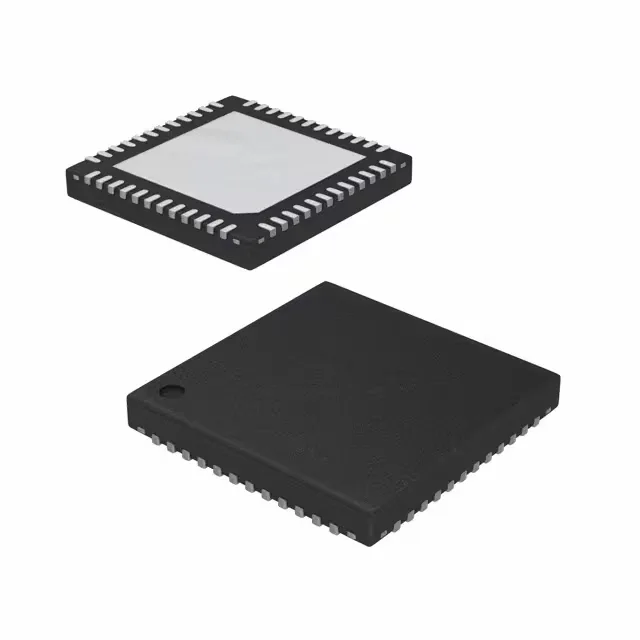
Package and rework — 64-QFN with exposed pad
The 64-QFN (9x9) with exposed pad is a standard footprint for this class of monitor. Rework is straightforward with hot air if the board has a solder-mask-defined pad opening; just watch the soak profile so the large pad doesn't cold-solder.
I²C and SPI — choosing the bus
Both I²C and SPI are available on the same pins, selected by a configuration pin or register. I²C saves pins on the host side (two wires) but runs slower; SPI gives faster register reads for real-time cell voltage polling. If the host MCU has a spare SPI port, that's the cleaner path for a 16-cell scan. The over-temperature fault protection is a hardware output that can trigger a shutdown independent of the bus — useful for safety-rated designs.