Renesas Electronics ISL28233FBZ — Analog & Data Acquisition

ISL28233FBZ Zero-Drift Op-Amp, 2 µV Offset, 8-SOIC

MPNISL28233FBZ
End of Life

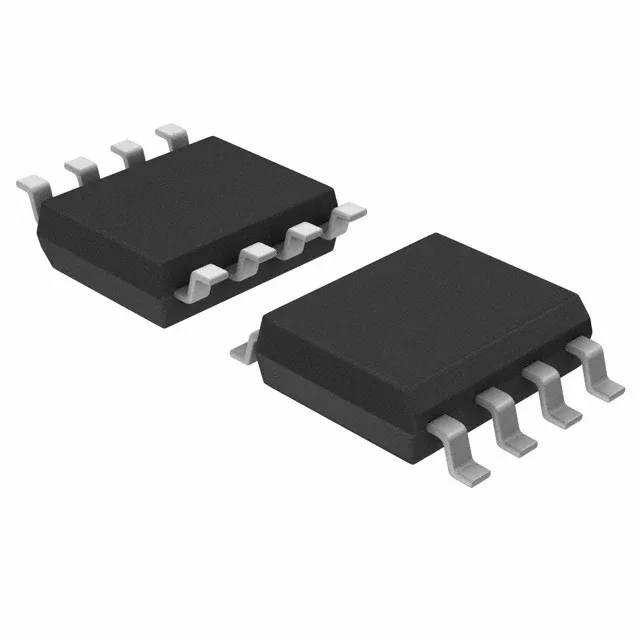
Renesas ISL28233FBZ dual zero-drift operational amplifier, 400 kHz gain-bandwidth, 0.2 V/µs slew rate, 2 µV input offset, 18 µA supply per channel, rail-to-rail output, 8-SOIC package, -40°C to 125°C, Tube.

$4.07Ref. price · indicative, final on quote
Packaging8-SOIC (0.154", 3.90mm Width)
RoHSROHS3 Compliant
Independent supplier — new & surplus stockAuthenticity-screened · ESD-safe packingListing updated Aug 2026

Specifications

ISL28233FBZ specifications
ParameterValue
Output typeRail-to-Rail
MountingSurface Mount
Amplifier typeZero-Drift
Voltage - input offset2 µV
Voltage - supply span1.8 V
Current - supply18µA (x2 Channels)
Current - input bias180 pA
Current - output (Channel)19 mA
Operating temperature-40°C ~ 125°C
Gain bandwidth product400 kHz
PackageTube
Slew rate0.2V/µs
Case8-SOIC (0.154\", 3.90mm Width)
Number of circuits2

Product details

Why a 2 µV offset matters for your precision chain

The Renesas ISL28233FBZ is a dual zero-drift operational amplifier that delivers a 2 µV typical input offset voltage — a figure that eliminates the need for external trimming in most precision DC measurement paths. With a gain-bandwidth product of 400 kHz and a 0.2 V/µs slew rate, this is a low-speed precision amplifier, not a high-speed ADC driver. It is designed for sensor signal conditioning, bridge amplifiers, thermocouple interfaces, and other applications where DC accuracy and low drift dominate the selection criteria.

18 µA per channel — sizing the power budget

Each of the two amplifiers draws 18 µA of supply current, for a total of 36 µA at no load. That places this part in the micropower class, suitable for battery-powered instruments, loop-powered 4-20 mA transmitters, and energy-harvesting sensor nodes. The supply range spans 1.8 V to 6 V, so it runs directly from a single lithium cell or a 3.3 V / 5 V regulated rail without an extra LDO. The rail-to-rail output swings within millivolts of either supply, preserving dynamic range at low supply voltages.

Frequently asked questions

How does a zero-drift op amp reduce offset voltage?

A zero-drift amplifier uses chopper-stabilization or auto-zero techniques to continuously measure and correct its own input offset voltage. This keeps the offset at the microvolt level and virtually eliminates drift over temperature and time.

ISL28233FBZ vs AD8628 — which is better?

Both are dual zero-drift amplifiers with similar offset specs (2 µV typical). The AD8628 offers a higher gain-bandwidth (2.5 MHz) and lower supply current (1 mA typical per channel), while the ISL28233FBZ draws only 18 µA per channel and operates down to 1.8 V. The choice depends on whether speed or micropower is the priority.