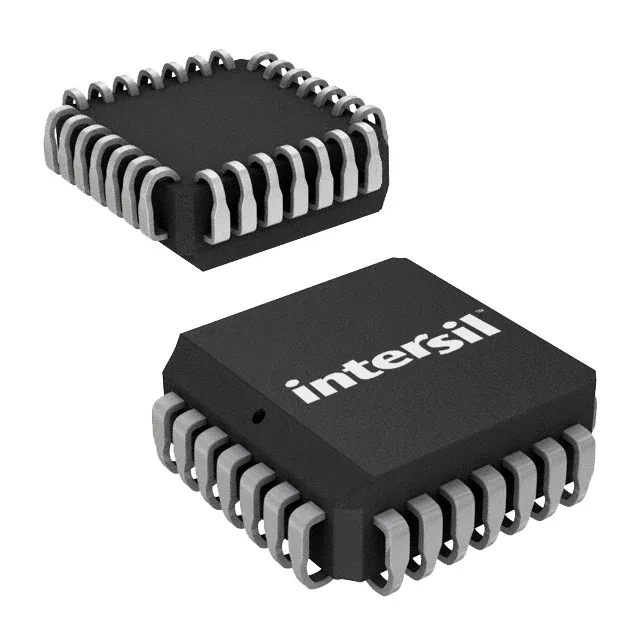
8 MHz programmable timer in 28-PLCC — what it is and what drives the choice
The CS82C54Z96 is a programmable timer from Renesas Electronics, operating at 8 MHz and designed for generating precise timing intervals in 5V logic systems (4.5V to 5.5V supply). It is a surface-mount device in a 28-LCC (J-Lead) package, also referred to as 28-PLCC (11.51×11.51 mm body). The 8 MHz maximum clock frequency sets the shortest achievable timing resolution — at that clock rate, the minimum count interval is 125 ns. For applications that need sub-microsecond resolution, this part delivers without pushing the clock tree into higher-frequency territory that complicates signal integrity on the PLCC pins.
Supply voltage and temperature — fit to the operating environment
The supply range of 4.5V to 5.5V ties the CS82C54Z96 to a 5V nominal rail. If your board is already running a 5V bus for legacy peripherals or analog front-ends, this part drops in without a level-shifter. The typical supply current is 10 mA — a modest load that a standard 78L05 regulator can handle, but watch the thermal budget if the regulator is shared with other high-current 5V loads. This part is not specified for industrial enclosures, unheated outdoor cabinets, or under-hood automotive. If your system sees ambient below freezing or above 70°C, you need the industrial-temperature variant of this timer family — the CS82C54-5 (or similar) in a wider temp grade.
Package and footprint — 28-PLCC design-in notes
The 28-PLCC package (J-Lead) uses a 1.27 mm pitch on four sides. The body is 11.51×11.51 mm, and the J-bend leads sit under the package, so the land pattern requires a solder-paste stencil that deposits paste inside the footprint. Reflow profile is standard for J-lead PLCC — peak temperature 245°C typical, but check the moisture sensitivity level (MSL) on the reel label before opening the bag. Because the leads are not visible after soldering, automated optical inspection (AOI) must rely on the solder fillet shape at the J-bend radius. If your assembly line is set up for QFN or BGA, the PLCC J-lead is a familiar process — no special handling beyond the stencil aperture design.