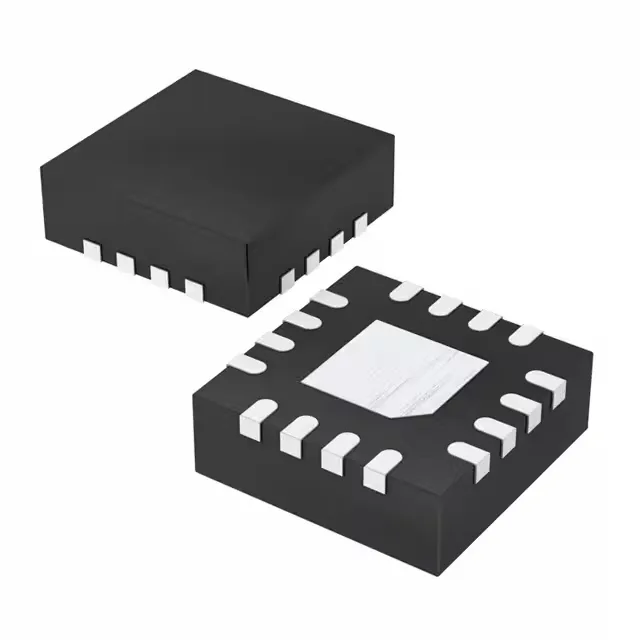
Renesas Electronics 8SLVP2102ANLGI — Clock & Timing ICs

Renesas 8SLVP2102ANLGI Fanout Buffer, 2 GHz, 1:2, LVPECL

MPN8SLVP2102ANLGI
End of Life

Renesas Electronics 8SLVP2102ANLGI Fanout Buffer (Distribution), 1:2 ratio, 2 GHz max, LVPECL output, 16-VFQFN (3x3 mm), Tray.

$9.71Ref. price · indicative, final on quote
Packaging16-VFQFN Exposed Pad
RoHSROHS3 Compliant
Independent supplier — new & surplus stockAuthenticity-screened · ESD-safe packingListing updated Aug 2026

Specifications

8SLVP2102ANLGI specifications
ParameterValue
TypeFanout Buffer (Distribution)
MountingSurface Mount
Supply voltage2.375V ~ 3.465V
Frequency - max2 GHz
Operating temperature-40°C ~ 85°C
InputCML, LVDS, LVPECL
OutputLVPECL
PackageTray
Case16-VFQFN Exposed Pad
Number of circuits2
Ratio - Input:Output1:2
Differential - Input:OutputYes/Yes

Product details

2 GHz differential fanout — 1:2 LVPECL distribution

The 8SLVP2102ANLGI from Renesas is a 1:2 fanout buffer that accepts CML, LVDS, or LVPECL inputs and delivers LVPECL outputs at up to 2 GHz — the differential path (Yes/Yes) preserves signal integrity across the pair, so a 10 Gbps serializer or a high-speed ADC clock tree sees the same edge rate at both destinations. Two independent buffer circuits (Number of Circuits: 2) each fan out one input to two outputs, giving a total of four LVPECL copies from a single reference — useful when a clock source must drive multiple SERDES lanes or FPGA banks without loading the oscillator.

Supplied in tray format (Package: Tray) — not tape-and-reel, so pick-and-place feeders need a tray handler or the parts must be transferred to tape for high-volume lines.

Lifecycle and compliance

ROHS3 Compliant per the manufacturer's declaration — no additional UL or IEC certification cited in the available documentation, but the RoHS status covers EU market access without exemption issues.

Frequently asked questions

What is the closest functional alternative to 8SLVP2102ANLGI — can 8SLVP2108ANLGI/W drop in?

The 8SLVP2108ANLGI/W is the same family with a 1:8 fanout ratio instead of 1:2 — same 2 GHz max frequency, same LVPECL output, same supply range and package footprint. It will not drop in without a board change because the pinout and circuit count differ, but the signal levels and termination scheme are identical, so a layout spin is straightforward.

What input signal types does the 8SLVP2102ANLGI accept?

It accepts CML, LVDS, and LVPECL differential inputs — the input stage self-biases for AC-coupled LVPECL and LVDS, while CML typically requires DC coupling with the correct termination resistors per the application note.