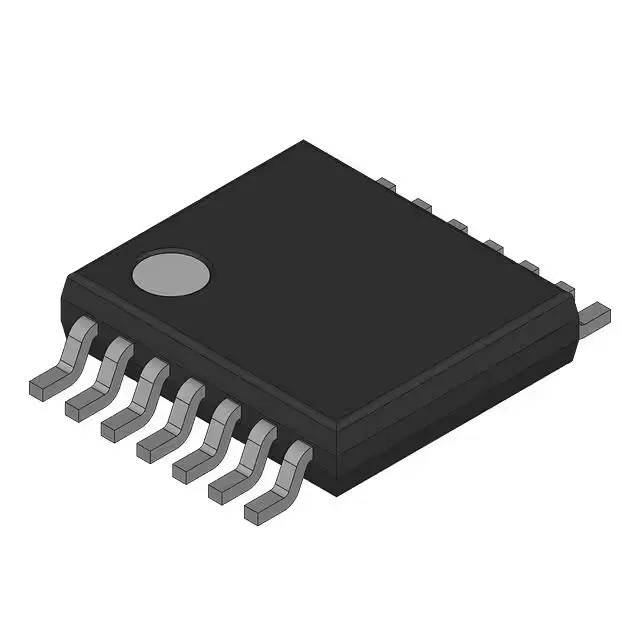
Renesas Electronics 74HCT125TELL-E — Analog & Data Acquisition

Renesas 74HCT125TELL-E Buffer, 4.5-5.5V, -40 to 125°C

MPN74HCT125TELL-E
End of Life

Renesas Electronics 74HCT series Buffer, Non-Inverting, 4-element, 1-bit per element, 4.5V~5.5V supply, 4mA output, -40°C~125°C, Bulk package.

$0.53Ref. price · indicative, final on quote
RoHSNot applicable
Series74HCT
Sourced new & surplus through independent channelsAuthenticity-screened · ESD-safe packingListing updated Aug 2026

Specifications

74HCT125TELL-E specifications
ParameterValue
Series74HCT
Logic typeBuffer, Non-Inverting
Output type3-State
Voltage4.5V ~ 5.5V
Current - output high, low4mA, 4mA
Operating temperature-40°C ~ 125°C (TA)
PackageBulk
Number of elements4
Number of bits per element1

Product details

Quad 3-state buffer — 74HCT family, 5 V logic, wide temp range

The 74HCT125TELL-E is a quad non-inverting buffer with 3-state outputs, part of Renesas' 74HCT logic family. Each of the four elements handles one bit, giving you independent control over four signal paths on a single IC.

Active production — no obsolescence risk for new designs

Renesas lists this part as Active with a current lifecycle stage.

Package and procurement — Bulk means tube or tray

Shipped in Bulk — typically tube or anti-static tray, not tape-and-reel. If your pick-and-place line expects embossed tape, factor in a tube-to-reel transfer or order the tape variant if Renesas offers one for this die. Four buffers in one package saves board space versus discrete single-gate parts. The 3-state output lets you share a data bus between multiple drivers — set the output high-Z when the bus belongs to another device.

Frequently asked questions

Will 74HCT125TELL-E drop into a board designed for 74LVCH32245ABFG?

No — they are not pin-compatible or functionally identical. The 74LVCH32245ABFG is a 32-bit transceiver (8 bits per element, 4 elements) running at 2.7 V, while the 74HCT125TELL-E is a 4-bit buffer (1 bit per element, 4 elements) running at 5 V. The pinout, supply voltage, and bit width all differ; a board spin would be required.