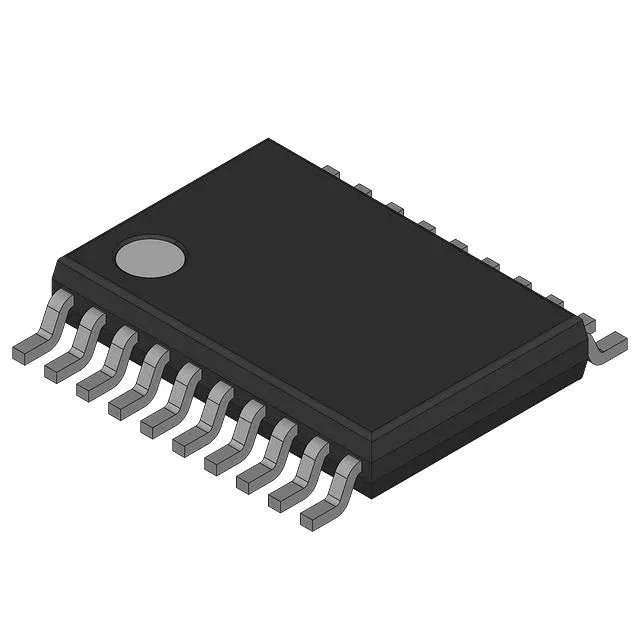
Renesas Electronics 74FCT245CTPGG — Analog & Data Acquisition

Renesas 74FCT245CTPGG 8-bit Transceiver, 20-TSSOP, 5V

MPN74FCT245CTPGG
End of Life

Renesas Electronics 74FCT series, 74FCT245CTPGG, 8-bit transceiver, non-inverting, 3-state outputs, 20-TSSOP (0.173", 4.40mm width), surface mount, 4.75V ~ 5.25V supply, -40°C to 85°C operating temperature.

$0.6Ref. price · indicative, final on quote
Packaging20-TSSOP (0.173", 4.40mm Width)
Series74FCT
Sourced new & surplus through independent channelsAuthenticity-screened · ESD-safe packingListing updated Aug 2026

Specifications

74FCT245CTPGG specifications
ParameterValue
Series74FCT
Logic typeTransceiver, Non-Inverting
Output type3-State
MountingSurface Mount
Voltage4.75V ~ 5.25V
Current - output high, low15mA, 64mA
Operating temperature-40°C ~ 85°C (TA)
PackageBulk
Case20-TSSOP (0.173\", 4.40mm Width)
Number of elements1
Number of bits per element8

Product details

20-TSSOP footprint and board integration

The 74FCT245CTPGG comes in a 20-TSSOP package with a 0.173-inch (4.40 mm) body width — a compact footprint for bus transceiver functions on dense PCBs. The 0.65 mm pitch demands a fine-pitch solder paste stencil; typical land pattern follows JEDEC MO-153 for TSSOP-20. The 15 mA source / 64 mA sink output drive handles standard TTL loads and lightly loaded backplanes.

Frequently asked questions

Does 74FCT245CTPGG have 3-state outputs?

Yes — the output type is 3-State, so the bus lines can be driven high, low, or placed in high-impedance (Hi-Z) when the output enable control is inactive. This allows multiple transceivers to share a common bus without contention.

Is 74FCT245CTPGG 5V tolerant?

Inputs are 5 V tolerant within that supply range; for 3.3 V interfacing, the part is not specified to accept 3.3 V inputs without a level shifter.

What is the difference between 74FCT245CTPGG and 74FCT245T?

The 74FCT245CTPGG is the 20-TSSOP surface-mount variant of the 74FCT245T, which typically comes in a 20-DIP or 20-SOIC package. The TSSOP package saves board space but requires fine-pitch soldering. Functionally both are 8-bit non-inverting transceivers with 3-state outputs.