What this 16-bit bus transceiver brings to the board
The Renesas 74FCT163245CPVG is a 16-bit non-inverting bus transceiver organised as two 8-bit elements with independent direction and output-enable controls. Its 2.7V to 3.6V supply range lets it sit comfortably on a 3.3V rail while tolerating the low end of a 2.5V system without a separate regulator. The asymmetric output drive — 8 mA source, 24 mA sink — is sized for heavily loaded data buses where the falling edge needs more current to discharge line capacitance quickly. The 3-state outputs allow multiple drivers to share the same bus lines, which is the standard arrangement for memory or peripheral data buses in industrial controllers and telecom line cards.
Supply voltage and why it matters for mixed-voltage designs
Rated for 2.7V to 3.6V, this part bridges the gap between legacy 3.3V logic and the 2.5V I/O domains found on many current FPGAs and SoCs. The 2.7V minimum means it still operates correctly through a 3.3V rail that has dropped during a brown-out or under heavy load, which is a common concern in power-sequenced systems. Compare this to the 4.5V supply required by the 74FCT16245ATPVG — that part needs a 5V rail and cannot be dropped into a 3.3V-only design without a level translator.
Package and footprint — 48-BSSOP versus 48-SSOP
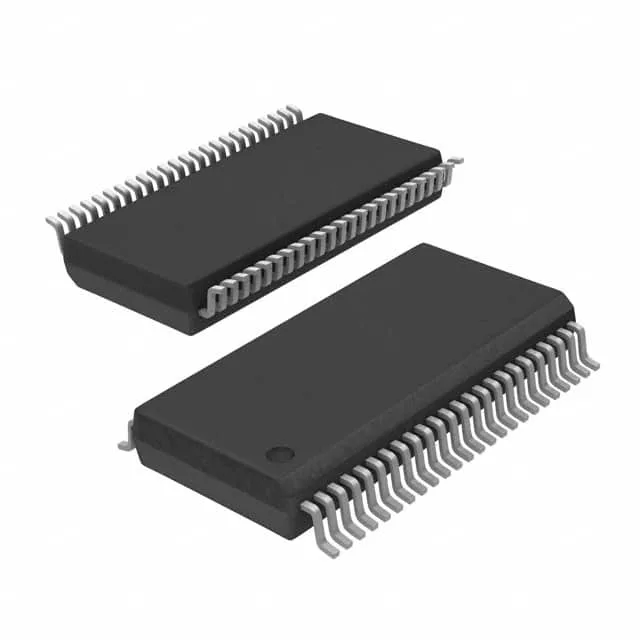
The 74FCT163245CPVG comes in a 48-BSSOP package with 0.295 inch body width and 7.50 mm lead pitch. On the layout side, the 7.50 mm width is the wider SSOP body (the 5.3 mm shrink version is a different footprint), so verify the land pattern matches the 300-mil body width before committing the PCB.
The 85°C ceiling is the standard industrial boundary — if the junction temperature in your enclosure exceeds this under full load, you need the extended-temperature variant or active cooling.
No last-time-buy notice or phase-out has been issued for this order code.