15 ns access, 40 MHz — the FIFO's speed envelope
The 7201LA15JGI is a 4.5K (512 x 9) asynchronous FIFO from Renesas's 7200 series, with a 15 ns access time and 40 MHz maximum data rate. The 15 ns access defines the fastest cycle time for a read or write operation — at 40 MHz the clock period is 25 ns, so the 15 ns access leaves 10 ns of margin for address setup and hold, which is comfortable for most 5 V logic families.
5 V supply, industrial temp — where it fits
Max supply current is 80 mA — budget this on the 5 V rail. In a typical system with a 500 mA regulator, the FIFO draws about 16% of the available current, leaving headroom for the rest of the logic.
32-PLCC — footprint and rework
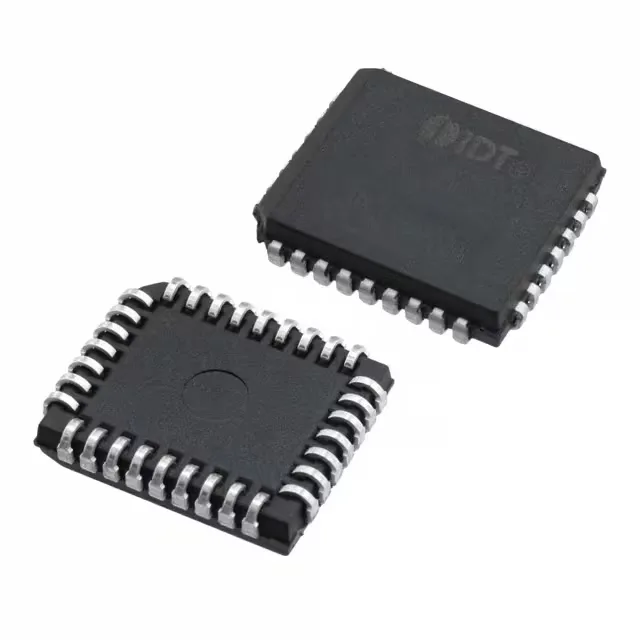
Housed in a 32-lead PLCC with J-leads (14 x 11.46 mm body). The J-lead footprint is surface-mount but the leads are visible and accessible — rework with a hot-air station is straightforward, and the package is less prone to tombstoning than fine-pitch QFPs. The PLCC socket option exists for prototyping, though production is direct solder. Supplied in tube packaging — not tape-and-reel. If your pick-and-place feeder is set up for tubes, this is fine; if it requires tape, factor in a tube-to-tape conversion step or order a reel variant if one exists in the family.
Asynchronous operation and flag logic
Asynchronous architecture means the read and write clocks are independent — no clock domain crossing logic is needed on the board. The FIFO handles full/empty flag generation internally, but note that FWFT (First-Word Fall-Through) is not supported and there are no programmable flags. The empty flag goes active after the last word is read; there is no early flag to pre-fetch the next word, so the downstream logic must poll or interrupt on the flag transition. Retransmit capability is present — pulling the retransmit pin low resets the read pointer to the first word without clearing the FIFO. This is useful in packet-based systems where a CRC error triggers a re-read of the same data block.
Depth and width expansion
Supports depth and width expansion — multiple 7201LA15JGI devices can be cascaded to create a deeper FIFO (e.g., 1024 x 9 by using two chips with the full/empty flags daisy-chained) or a wider FIFO (512 x 18 by using two chips with common read/write clocks). The bus is uni-directional, so data flows one way per device; bidirectional buffering requires two FIFOs back-to-back.