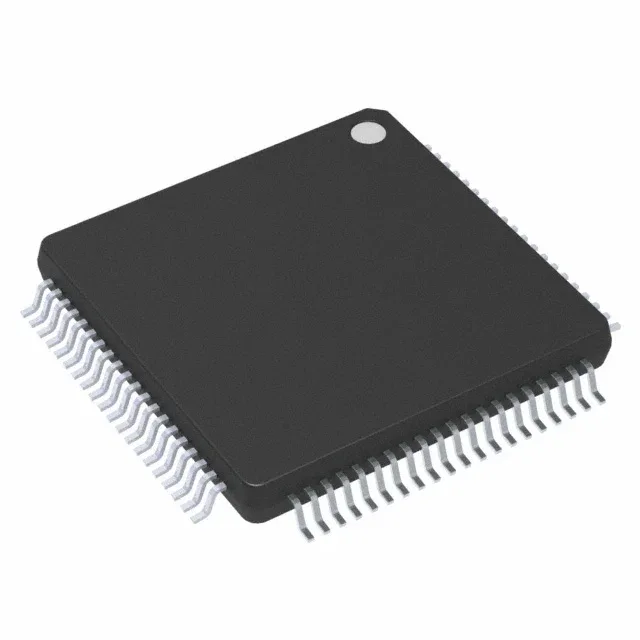
NXP USA Inc. MKL33Z64VLK4 — Microcontrollers & Processors (MCU / MPU / DSP)

NXP MKL33Z64VLK4 Kinetis KL3 MCU, 48MHz, 64KB Flash, 80-LQFP

MPNMKL33Z64VLK4
Active

NXP Kinetis KL3 series 32-bit ARM Cortex-M0+ MCU, 48 MHz, 64 KB Flash, 8 KB RAM, 70 I/O, 20x16-bit ADC, 1x12-bit DAC, segment LCD controller, -40°C to 105°C, 80-LQFP.

$4.7099Ref. price · indicative, final on quote
Independent supplier — new & surplus stockAuthenticity-screened · ESD-safe packingListing updated Jul 2026

Specifications

MKL33Z64VLK4 specifications
ParameterValue
SeriesKinetis KL3
MountingSurface Mount
Oscillator typeInternal
Program memory typeFLASH
Voltage - supply (Vcc (Vdd))1.71V ~ 3.6V
Operating temperature-40°C~105°C(TA)
Speed48MHz
PackageTube
RAM size8K x 8
Core size32-Bit Single-Core
PeripheralsDMA, LCD, PWM, WDT
ConnectivityFlexIO, I²C, IrDA, SPI, UART/USART
Number of i (O)70
Core processorARM® Cortex®-M0+
Case80-LQFP
Data convertersA/D 20x16b; D/A 1x12b
Program memory size64KB (64K x 8)

Product details

48 MHz Cortex-M0+ with segment LCD drive — field-fit summary

The NXP MKL33Z64VLK4 is a 32-bit ARM Cortex-M0+ MCU from the Kinetis KL3 series, clocked at 48 MHz with 64 KB Flash and 8 KB RAM.

What the 48 MHz and 105°C rating mean on site

48 MHz is the core ceiling.

Mixed-signal and connectivity — what is on the die

Frequently asked questions

What is MKL33Z64VLK4's listed speed?

The core processor runs at 48 MHz. That is the ARM Cortex-M0+ clock ceiling — enough for segment LCD updates, sensor polling, and Modbus RTU communication without pushing the timing budget.

What is the MKL33Z64VLK4's operating temperature range?

It is rated for -40°C to 105°C — industrial grade. Suitable for outdoor telecom enclosures, engine-bay-adjacent controllers, and factory-floor HMI panels where ambient temperatures can spike.

Does the MKL33Z64VLK4 include an ADC and DAC?

Yes. It has a 20-channel 16-bit ADC and a single 12-bit DAC on-chip. The ADC can sample multiple analog sensor inputs without an external mux; the DAC provides one analog output for setpoint or signal generation.