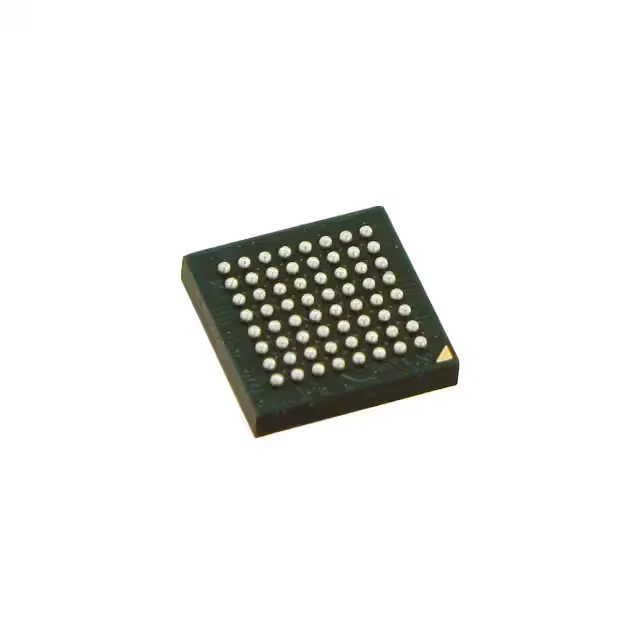
NXP USA Inc. MKL33Z256VMP4 — Microcontrollers & Processors (MCU / MPU / DSP)

NXP MKL33Z256VMP4 Kinetis KL3 MCU, ARM Cortex-M0+, 48MHz, 256KB Flash

MPNMKL33Z256VMP4
Active

NXP Kinetis KL3 series 32-bit ARM Cortex-M0+ MCU, MKL33Z256VMP4, 48MHz, 256KB Flash, 32KB RAM, 54 I/O, segment LCD controller, 64-MAPBGA (5x5mm), -40°C to 105°C.

$10.1300Ref. price · indicative, final on quote
Independent supplier — new & surplus stockAuthenticity-screened · ESD-safe packingListing updated Jul 2026

Specifications

MKL33Z256VMP4 specifications
ParameterValue
SeriesKinetis KL3
MountingSurface Mount
Oscillator typeInternal
Program memory typeFLASH
Voltage - supply (Vcc (Vdd))1.71V ~ 3.6V
Operating temperature-40°C~105°C(TA)
Speed48MHz
PackageTray
RAM size32K x 8
Core size32-Bit Single-Core
PeripheralsDMA, I²S, LCD, LVD, POR, PWM, WDT
ConnectivityI²C, SPI, UART/USART
Number of i (O)54
Core processorARM® Cortex®-M0+
Case64-LFBGA
Data convertersA/D 20x16b; D/A 1x12b
Program memory size256KB (256K x 8)

Product details

Kinetis KL3 MCU with segment LCD drive

The NXP MKL33Z256VMP4 is a 32-bit ARM Cortex-M0+ microcontroller from the Kinetis KL3 series, clocked at 48 MHz. The part integrates a segment LCD controller, DMA, I²S audio interface, and a 20-channel 16-bit ADC plus a 12-bit DAC — peripherals that push it beyond a generic M0+ part into display-and-sensor hub territory. The supply range spans 1.71 V to 3.6 V, and the operating temperature covers -40°C to 105°C, suiting it for industrial and outdoor equipment where the panel or meter must run reliably in a hot enclosure.

48 MHz is the ceiling for this core; the Cortex-M0+ is a von Neumann, two-stage pipeline design optimised for low power rather than raw throughput. For a segment LCD metering application or a sensor-fusion node polling I²C and SPI peripherals, 48 MHz is ample — the part will spend most of its time in a wait-for-interrupt or low-power sleep state.

256 KB Flash / 32 KB RAM — sizing the firmware

256 KB of Flash is enough for a moderate-complexity application: a FreeRTOS kernel, a segment LCD driver with a few hundred glyphs, a Modbus RTU stack over UART, and a calibration table. The 32 KB of RAM (organised as 32K x 8) must host the stack, DMA buffers, and LCD frame buffer — segment LCDs are memory-mapped, so the frame buffer size depends on the number of segments driven. If the design uses all 54 GPIOs for a large segment LCD and a keypad, check that the DMA and LCD controller don't compete for the same RAM bank; the DMA engine can offload data movement, but the memory map is fixed at 32 KB.

No EOL notice or last-time-buy schedule is on record.

Frequently asked questions

What is the package and pin count for MKL33Z256VMP4?

The MKL33Z256VMP4 is supplied in a 64-ball MAPBGA package with a 5x5 mm body. The 64-LFBGA and 64-MAPBGA designations refer to the same footprint.

What is the difference between MKL33Z256VMP4 and MKL33Z128VMP4?

The MKL33Z128VMP4 has 128 KB of Flash instead of 256 KB; both share the same 64-MAPBGA package, Cortex-M0+ core at 48 MHz, and peripheral set including the segment LCD controller. The RAM and I/O counts are identical.

What is the maximum operating frequency of MKL33Z256VMP4?

The maximum core clock frequency is 48 MHz, driven by an internal oscillator or an external clock source.