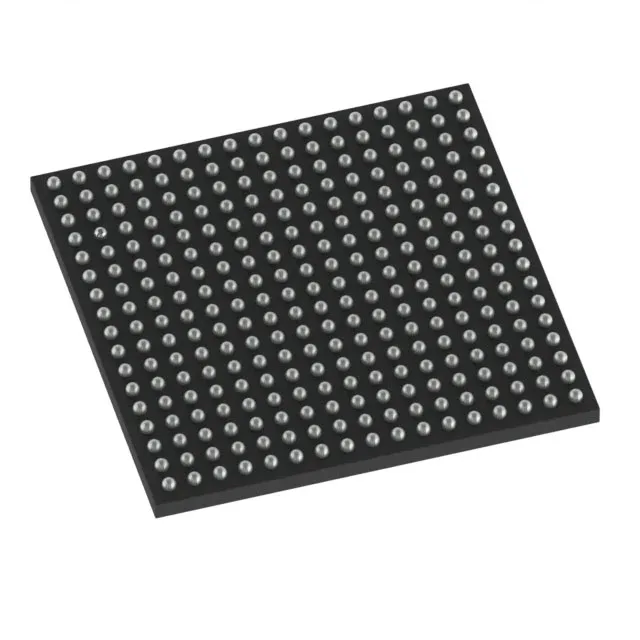
NXP USA Inc. MIMXRT1166DVM6A — Microcontrollers & Processors (MCU / MPU / DSP)

NXP MIMXRT1166DVM6A i.MX RT1166 Dual-Core MCU, 600 MHz, 289-LFBGA

MPNMIMXRT1166DVM6A
Active

NXP i.MX RT1166 crossover MCU, MIMXRT1166DVM6A, 32-bit dual-core ARM Cortex-M4 at 240 MHz and Cortex-M7 at 600 MHz, 1M x 8 RAM, external program memory, 289-LFBGA (14x14), 0°C to 95°C, 2.4V–3.6V supply.

$23.4600Ref. price · indicative, final on quote
StockContact for availability
MOQ1 pcs
  • 100% new & originalTraceable channels only — no refurbs, no pulls, no remarked parts.
  • Date & lot codes on quoteStated per line before you commit; label photos on request.
  • MSL-compliant ESD packingMoisture-sealed bags with indicator cards; reels photo-verified.
  • PayPal buyer protectionPay by T/T, PayPal or Payoneer — card payments covered end to end.

Specifications

MIMXRT1166DVM6A Technical Specifications
ParameterValue
Seriesi.MX
Mounting typeSurface Mount
Oscillator typeInternal
Program memory typeExternal Program Memory
Voltage - supply (Vcc (Vdd))2.4V ~ 3.6V
Operating temperature0°C ~ 95°C (TJ)
Speed240MHz, 600MHz
PackageTray
RAM size1M x 8
Core size32-Bit Dual-Core
PeripheralsBrown-out Detect/Reset, DMA, POR, PWM, WDT
ConnectivityCANbus, EBI/EMI, Ethernet, I²C, MMC/SD/SDIO, SAI, SPDIF, SPI, UART/USART, USB OTG
Core processorARM® Cortex®-M4/M7
Case289-LFBGA
Data convertersA/D 2x12b; D/A 1x12b

Product details

Dual-core crossover MCU for real-time and application processing

The NXP MIMXRT1166DVM6A is a 32-bit dual-core crossover MCU from the i.MX series, combining an ARM Cortex-M7 core running at 600 MHz with a Cortex-M4 core at 240 MHz. This asymmetric architecture lets one chip handle both deterministic control loops (M4) and high-throughput application code (M7).

Speed split and what it means for your design

The 600 MHz Cortex-M7 handles the heavy lifting — graphics, networking stacks, signal processing — while the 240 MHz Cortex-M4 runs time-critical tasks like PWM updates, encoder capture, or fault-response routines. This avoids the interrupt-latency jitter that can hit a single-core part when the main loop is busy with Ethernet traffic. If you are migrating from a single-core Cortex-M7 at 600 MHz, the M4 core effectively gives you a dedicated real-time coprocessor without adding a second chip.

Temperature grade and environment

Rated 0°C to 95°C (junction), this part is suited for indoor equipment — factory controllers, commercial gateways, test instrumentation — not for under-hood automotive or outdoor enclosures without active cooling. The 289-LFBGA (14x14 mm) package demands controlled soldering profiles and X-ray inspection; it is not a field-swap part. Plan for a production reflow oven and a board-level test step.

Memory and program storage

Program memory is external — the chip boots from SPI NOR Flash, NAND, or SD/eMMC via the EBI/EMI or SDIO interfaces. The 1M x 8 on-chip RAM is enough for code scratch and data buffers.

Sourcing and lifecycle

Lifecycle status is Active, so factory supply is normal — no last-time-buy or obsolescence pressure for current designs. The MIMXRT1166DVM6A is sourced and quoted to order against an RFQ through independent distribution; availability and current pricing are confirmed at quote time. No official second-source or pin-compatible alternate is listed, so dual-sourcing would require a board redesign to a different i.MX RT family member.

Frequently asked questions

What is the operating frequency of MIMXRT1166DVM6A?

The MIMXRT1166DVM6A runs two cores: an ARM Cortex-M7 at 600 MHz and an ARM Cortex-M4 at 240 MHz.

What is the operating temperature range of MIMXRT1166DVM6A?

The operating junction temperature range is 0°C to 95°C.

What package type is MIMXRT1166DVM6A?

It comes in a 289-LFBGA (14x14 mm) surface-mount package.

What is the recommended replacement for MIMXRT1166DVM6A?

No official replacement or pin-compatible alternate is listed. For a different density or feature set, consider other i.MX RT1166 family order codes, which share the same package and core architecture.