204 MHz dual-core — what it buys you
The M4 at 204 MHz handles the heavy lifting — control loops, protocol stacks, and DSP filtering — while the M0 manages I2C, SPI, UART housekeeping, and wake-up logic. That split avoids the interrupt overhead a single core would carry when juggling both Ethernet and a motor PWM loop. For a design that currently runs an M4-only part and struggles with latency during CAN traffic peaks, the M0 offload is a genuine throughput gain without a clock-rate increase.
ROMless — plan the Flash companion
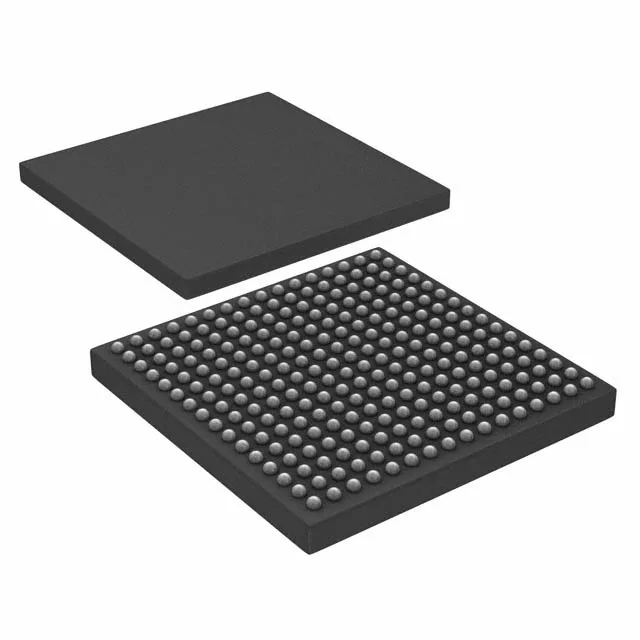
The LPC43S50 has zero on-chip program memory. Every instruction comes from an external Flash device, typically a quad-SPI NOR part connected to the SPIFI interface. The BOM must budget for that Flash, plus the PCB routing for the SPI lines. The 164 available I/O leave plenty of headroom for a parallel EBI/EMI bus if a larger code footprint is needed, but the default path is a serial Flash in the 8-pin SOIC footprint near the LBGA.