72 MHz ARM7 core — timing margin for protocol stacks
At 72 MHz, the core runs a lightweight TCP/IP stack alongside CANopen and USB device firmware. The 58 KB SRAM is partitioned for Ethernet frame buffers.
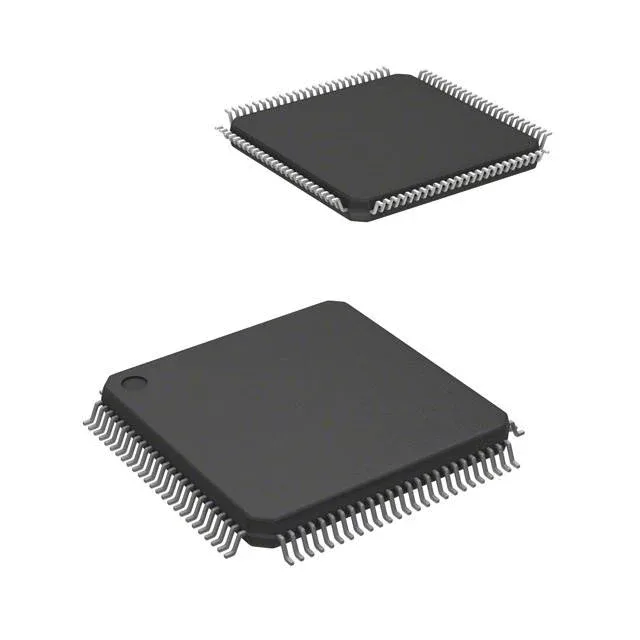
NXP LPC2366FBD100,551, LPC2300 series, ARM7 72 MHz, 256 KB Flash, 58 KB RAM, Ethernet/CAN/USB, 70 I/O, 100-LQFP (14x14 mm), 3.0-3.6 V, -40°C to 85°C, Tray.
| Parameter | Value |
|---|---|
| Series | LPC2300 |
| Mounting | Surface Mount |
| Oscillator type | Internal |
| Program memory type | FLASH |
| Voltage - supply (Vcc (Vdd)) | 3V ~ 3.6V |
| Operating temperature | -40°C~85°C(TA) |
| Speed | 72MHz |
| Package | Tray |
| RAM size | 58K x 8 |
| Core size | 16/32-Bit |
| Peripherals | Brown-out Detect/Reset, DMA, I²S, POR, PWM, WDT |
| Connectivity | CANbus, Ethernet, I²C, Microwire, SPI, SSI, SSP, UART/USART, USB |
| Number of i (O) | 70 |
| Core processor | ARM7® |
| Case | 100-LQFP |
| Data converters | A/D 6x10b; D/A 1x10b |
| Program memory size | 256KB (256K x 8) |
At 72 MHz, the core runs a lightweight TCP/IP stack alongside CANopen and USB device firmware. The 58 KB SRAM is partitioned for Ethernet frame buffers.
Within the LPC2300 family, the LPC2368 (512 KB Flash, 64 KB RAM) is pin-compatible and a direct drop-in upgrade. No official second-source is listed.
The core runs at 72 MHz, which is the maximum CPU clock for the ARM7TDMI-S in this device.