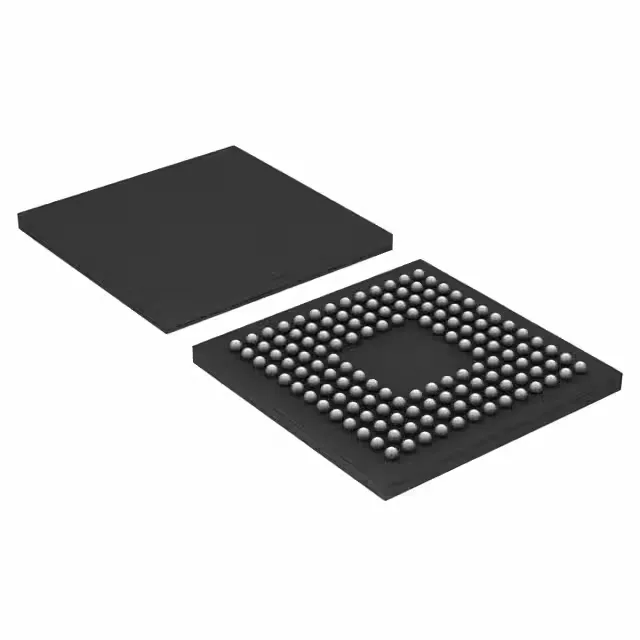
NXP USA Inc. LPC2292FET144,551 — Microcontrollers & Processors (MCU / MPU / DSP)

NXP LPC2292FET144,551 ARM7 MCU, 60 MHz, 256 KB Flash, 112 I/O

MPNLPC2292FET144,551
Obsolete

NXP LPC2200 series ARM7® MCU, LPC2292FET144,551, 60 MHz core, 256 KB Flash, 16 KB RAM, 112 I/O, 144-TFBGA 12×12 mm, 1.65–3.6 V, -40°C to 85°C.

Independent supplier — new & surplus stockAuthenticity-screened · ESD-safe packingListing updated Jul 2026

Specifications

LPC2292FET144,551 specifications
ParameterValue
SeriesLPC2200
MountingSurface Mount
Oscillator typeInternal
Program memory typeFLASH
Voltage - supply (Vcc (Vdd))1.65V ~ 3.6V
Operating temperature-40°C~85°C(TA)
Speed60MHz
PackageBag
RAM size16K x 8
Core size16/32-Bit
PeripheralsPOR, PWM, WDT
ConnectivityCANbus, EBI/EMI, I²C, Microwire, SPI, SSI, SSP, UART/USART
Number of i (O)112
Core processorARM7®
Case144-TFBGA
Data convertersA/D 8x10b
Program memory size256KB (256K x 8)

Product details

60 MHz ARM7 — performance for real-time control

The 60 MHz core handles sensor fusion, motor commutation, and protocol bridging without external memory. Single-cycle multiply and fast interrupt response keep control loops tight for CANopen or DeviceNet slave nodes.

Memory and I/O — sizing the BOM

256 KB of Flash and 16 KB of SRAM suit applications running a lightweight RTOS with a moderate application image — think bootloader + one control task + CAN stack. The 112 I/O lines provide ample headroom for parallel LCD interfaces, keypad matrices, and discrete sensor inputs without external GPIO expanders.

On-chip CANbus, SPI, I²C, UART, and Microwire/SSI/SSP interfaces let this MCU talk to motor drives, HMI panels, and remote I/O modules over a single chip. The PWM and watchdog timer handle local actuator timing and system supervision, while the 8-channel 10-bit ADC captures analog feedback from potentiometers or current-sense resistors.

Industrial temperature grade — deployment environment

What about a replacement?

No official pin-compatible replacement from NXP is recorded for this order code. Designers needing a functional equivalent should evaluate newer ARM Cortex-M3 or Cortex-M4 MCUs with CAN and similar peripheral sets, but a board respin will be required due to package and voltage differences. For a like-for-like swap in an existing BOM, the only path is the surplus market.

Frequently asked questions

What is the replacement for LPC2292FET144?

No official replacement order code is listed. The part can only be sourced through surplus or broker channels; a board-level redesign with a current ARM Cortex-M MCU is the recommended path for new production.

Where can I buy LPC2292FET144,551?

This obsolete part is sourced to order against an RFQ through independent distribution channels. Availability and current pricing are confirmed at quote time — submit an RFQ for a current stock check.

What is the pinout of LPC2292FET144?

The pinout is defined for the 144-ball TFBGA package (12×12 mm). Refer to the NXP LPC2292 datasheet for the full ball-map and signal assignments.

Can LPC2292FET144 be programmed with an ARM7 toolchain?

Yes, the ARM7TDMI-S core is supported by standard ARM7 toolchains including Keil MDK, IAR EWARM, and GCC-based environments (e.g., arm-none-eabi-gcc). The 256 KB Flash is programmed via JTAG or serial ISP.

What is the speed of LPC2292FET144,551?

The core runs at 60 MHz, which is the maximum clock frequency for the ARM7TDMI-S processor in this device.