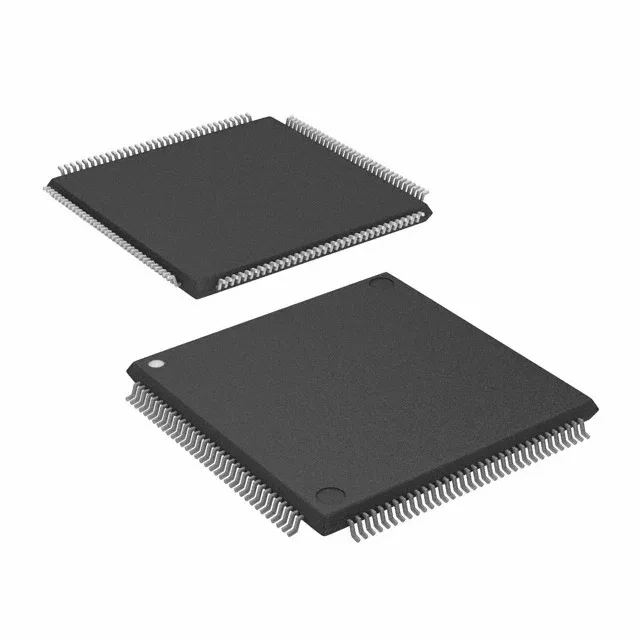
NXP USA Inc. LPC2212FBD144/01,5 — Microcontrollers & Processors (MCU / MPU / DSP)

NXP LPC2212FBD144/01,5 ARM7 MCU, 60 MHz, 128 KB Flash

MPNLPC2212FBD144/01,5
NRND

NXP LPC2200 series ARM7 MCU, LPC2212FBD144/01,5, 16/32-Bit core at 60 MHz, 128 KB Flash, 16K x 8 RAM, 112 I/O, 144-LQFP, -40 to 85 °C.

$23.9500Ref. price · indicative, final on quote
Independent supplier — new & surplus stockAuthenticity-screened · ESD-safe packingListing updated Jul 2026

Specifications

LPC2212FBD144/01,5 specifications
ParameterValue
SeriesLPC2200
MountingSurface Mount
Oscillator typeInternal
Program memory typeFLASH
Voltage - supply (Vcc (Vdd))1.65V ~ 1.95V
Operating temperature-40°C ~ 85°C (TA)
Speed60MHz
PackageTray
RAM size16K x 8
Core size16/32-Bit
PeripheralsPOR, PWM, WDT
ConnectivityEBI/EMI, I²C, Microwire, SPI, SSI, SSP, UART/USART
Number of i (O)112
Core processorARM7®
Case144-LQFP
Data convertersA/D 8x10b
Program memory size128KB (128K x 8)

Product details

Connectivity and on-chip peripherals

Peripheral set includes POR, PWM, and WDT for basic system supervision and motor-drive timing. The connectivity block covers EBI/EMI, I²C, SPI, SSI, SSP, and UART/USART interfaces, plus Microwire — a legacy synchronous protocol still found in some industrial sensor modules. An 8-channel 10-bit ADC is integrated for analog feedback paths. The internal oscillator reduces external BOM count, though a precision external clock may be preferred for timing-critical bus applications.

Frequently asked questions

What is the closest pin-compatible alternative to LPC2212FBD144/01,5?

Within the LPC2200 family, pin-compatible density variants (e.g., LPC2214 with 256 KB Flash) share the same 144-LQFP footprint and peripheral map. For new designs, evaluate the LPC23xx or LPC17xx series for a Cortex-M3 upgrade path, though pin compatibility requires a layout review.

What is LPC2212FBD144/01,5's listed speed?

The core processor runs at 60 MHz, which is the maximum clock for the ARM7TDMI-S core in this device. Bus timing and peripheral clock dividers are configured through the PLL and clock divider registers.